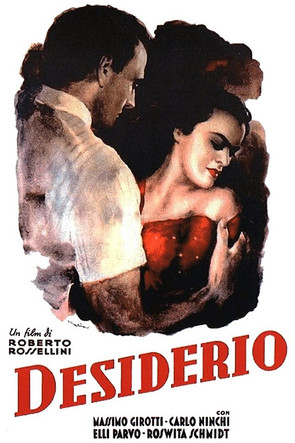
Desire
1946
No user ratings available yet
Representation score: 4.4 out of 10
Representation Score
Limited
1940
Director
Amleto Palermi
Runtime
88 minutes
Average Rating
No ratings yetNew Showbiz Analysis
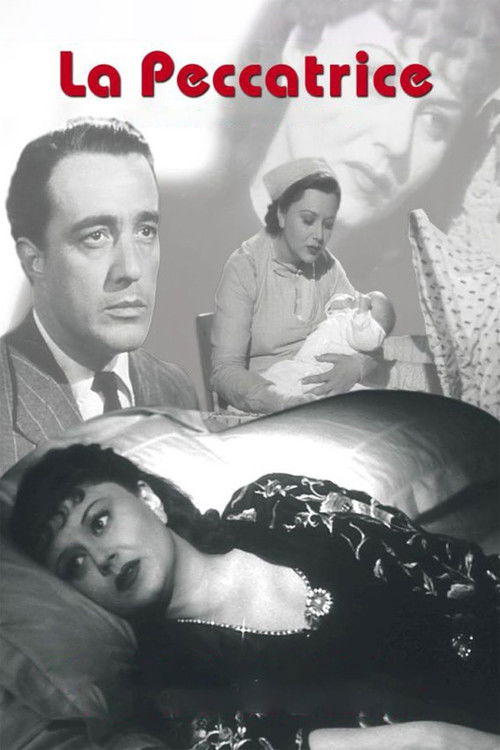
The Sinner is a period drama that focuses on the individual struggles of its female lead against societal expectations. While the narrative allows for exploration of female resilience and survival, it remains firmly grounded in the social constraints of 1940s Italy. The film’s diversity is limited, lacking racial or LGBTQ+ representation, and it primarily serves as a character study of a woman navigating a world defined by strict moral codes and the consequences of social transgressions. Ultimately, the film offers a glimpse into the challenges faced by women in a society governed by rigid social structures.
Category Breakdown
The film does not include any characters with non-traditional gender identities or same-sex relationships. It follows the assumption that everyone is straight and cisgender, which was common in 1940s Italian cinema.
The story centers around a female protagonist who faces systemic hardships and abandonment. Despite using traditional storylines, the film highlights her struggle for independence and resilience.
Given the production context and era, the film features a homogeneous cast with no evidence of diverse racial backgrounds or characters who reflect more than one aspect of diversity.
The film looks at the conflict between personal beliefs and rigid social morals. It explores the 'sinner' archetype through the lens of social scandal and displacement.
There is no information about characters with physical or neurodivergent disabilities in the film.
Present on Screen
Limited or Absent
Official Synopsis
Seduced and abandonned by her fiance, Maria Ferrante leaves home to avoid any scandal. She is trying to find work and place to stay but one misfortune after another comes into her life Venice Film Festival 1940
1946

1929

1949

1957
1944

1920
1955

1942
No reviews yet. Be the first to share your thoughts on this movie!
Use the rating form above to leave a star rating and optional review.