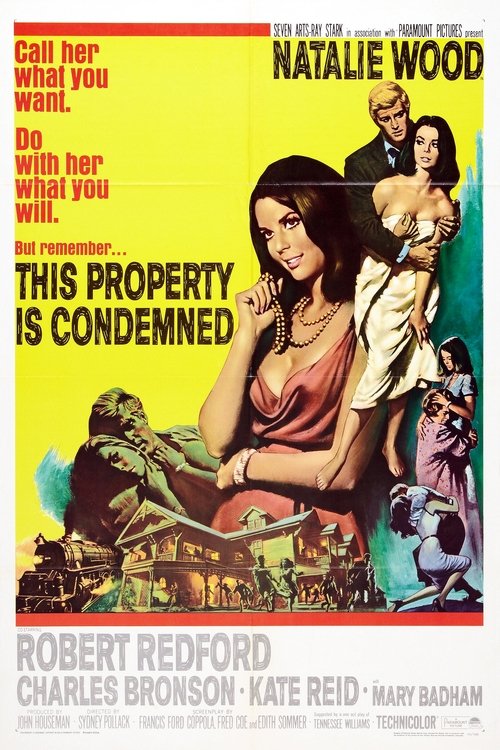
This Property Is Condemned
1966
No user ratings available yet
Representation score: 1.2 out of 10

Representation Score
Limited
1960
ApprovedDirector
Elia Kazan
Runtime
110 minutes
Average Rating
No ratings yetNew Showbiz Analysis
Wild River serves as a transitional drama that challenges the era's typical celebratory narratives of progress. By focusing on the friction between the Tennessee Valley Authority and local residents, the film explores the human cost of modernization. The film's strength lies in its willingness to address systemic racial tensions and the disruption of communal sovereignty. It uses the conflict over Black labor and land displacement to critique top-down institutional power. However, the film remains constrained by mid-century cinematic conventions. It lacks LGBTQ+ representation and does not feature characters with visible disabilities, keeping the focus on traditional romantic and social hierarchies.
Category Breakdown
The film focuses on a heterosexual relationship between the main character and a local woman. There are no representations of LGBTQ+ identities or non-cisgender characters.
Although the plot is driven by male bureaucratic goals, female characters provide the moral backbone of the film. The elderly resident's resistance offers a rare moment where a woman takes a leading role in the story.
The story highlights racial tensions by centering conflicts over the employment of Black laborers. This moves the narrative beyond including someone from a minority group without giving them real depth into a critique of Southern social structures.
The film critiques institutional authority and capitalist expansion. It questions whether state-mandated progress justifies the displacement of families and the disruption of local ecosystems.
There are no prominent depictions of physical or neurodivergent disabilities that serve as central character traits or drive the narrative.
Present on Screen
Limited or Absent
Official Synopsis
A young bureaucrat for the Tennessee Valley Authority goes to rural Tennessee to oversee the building of a dam. He encounters opposition from the local people, in particular a farmer who objects to his employment (with pay) of local black laborers. Much of the plot revolves around the eviction of a stubborn octogenarian from her home on an island in the river, and the young man's love affair with that woman's widowed granddaughter. Preserved by the Academy Film Archive in partnership with The Film Foundation.
1966
1965

1961

1955

1964

1951

1962
1965
No reviews yet. Be the first to share your thoughts on this movie!
Use the rating form above to leave a star rating and optional review.