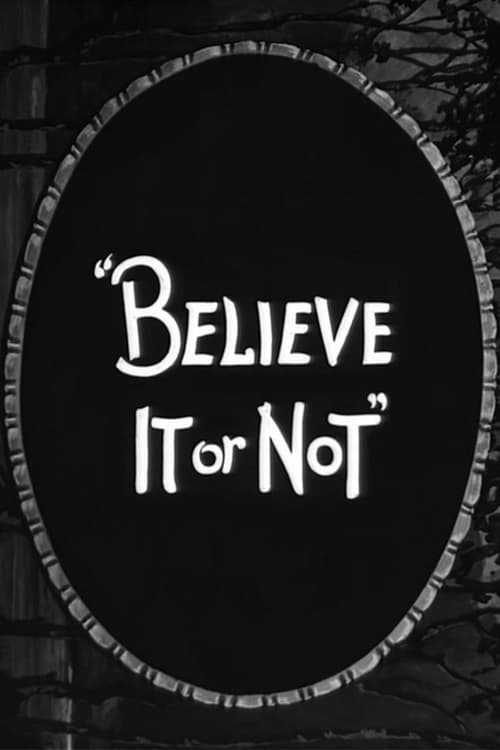
Believe It or Not (Second Series) #12
1932
No user ratings available yet
Representation score: 3.4 out of 10
Representation Score
Limited
1931
TV-GRuntime
7 minutes
Average Rating
No ratings yetNew Showbiz Analysis
This Vitaphone documentary functions as a travelogue of American curiosities, prioritizing wonder over narrative depth. It relies on an episodic structure that presents biological and historical anomalies as spectacles for viewer engagement. While the film includes a significant historical subject in a Black matriarch and former slave, it does so through a voyeuristic lens. The subjects are presented as objects of interest rather than individuals with ability to act. Ultimately, the work reinforces traditional social, religious, and familial structures of 1931. It serves more as a historical artifact of early sound-era curiosity media than a tool for meaningful representation.
Category Breakdown
The film does not include any LGBTQ+ characters or narratives. It focuses solely on biological oddities and historical longevity.
Women are depicted in traditional familial roles, such as a centenarian mother and daughter. The film emphasizes established domestic structures rather than exploring women's independence.
A 128-year-old former slave provides significant racial visibility. However, the individual is portrayed as a curiosity, limiting the depth of the representation.
The content celebrates traditional American institutions, including a hay-based church and family cemetery plots. It lacks any secular or systemic critique.
Physical anomalies, like a four-legged duck, are central to the film. These subjects are treated as spectacles rather than individuals with lived experiences.
Present on Screen
Limited or Absent
Official Synopsis
This entry in the series criss-crosses America to find various curiosities. Among them are a church in Nebraska made of bales of hay; a duck with four legs that lives with its owner in Flint, Michigan; a 128-year-old former slave who lives in Holly Springs, Mississippi, with her 100-year-old daughter; and, in a cemetery in Mayfield, Kentucky, a family plot wherein the deceased members are memorialized with life-size statues, including the patriarch's horse and other family pets. Vitaphone No. 1304.
1932
1978
1936

2019
1931
1932

1981
1941
No reviews yet. Be the first to share your thoughts on this movie!
Use the rating form above to leave a star rating and optional review.