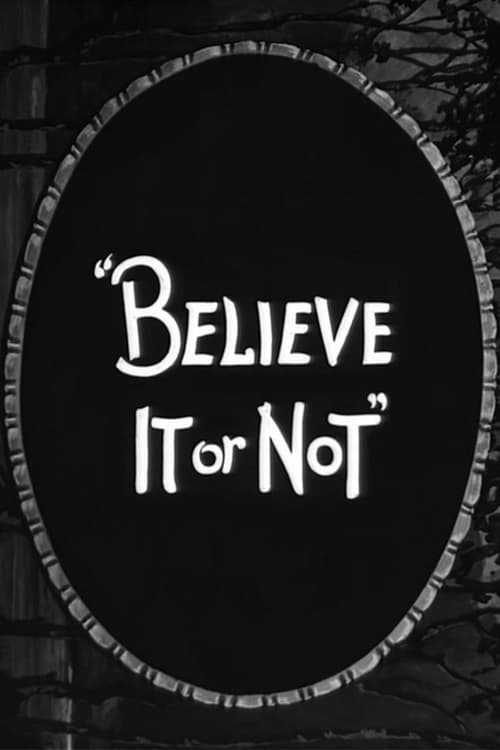
Believe It or Not (Second Series) #9
1932
No user ratings available yet
Representation score: 3.9 out of 10
Representation Score
Limited
1932
TV-GRuntime
8 minutes
Average Rating
No ratings yetNew Showbiz Analysis
This documentary serves as a survey of global curiosities. It offers significant geographic breadth by showcasing various international landmarks and communal labors. While the film provides visibility to non-Western cultures and individuals with disabilities, it remains rooted in an early 20th-century spectacle framework. The presentation often leans toward exoticism rather than deep cultural nuance. Ultimately, the work captures a wide variety of global phenomena without modern multi-layered depth.
Category Breakdown
The film does not depict any LGBTQ+ identities or non-straight relationships. It focuses on physical oddities and traditional communal rituals.
The story focuses on spectacle and physical feats. The role of the boat builder is defined by physical strength rather than gendered power dynamics.
The film showcases non-Western cultures in the Philippines, China, and Japan. These cultures are presented through a 1930s curiosity lens.
The film presents cultural practices, including religious rituals in Luxembourg, as unique spectacles. It operates as a neutral observer without critiquing Western institutions.
The film features a one-armed boat builder who demonstrates adaptive skills. However, the disability is framed as a curiosity within the broader context of the series' spectacle.
Present on Screen
Limited or Absent
Official Synopsis
In Robert L. Ripley's absence, Leo Donnelly acts as the guide to the unusual from around the world. A group of people in the Philippines are moving a house, foundation and all, six miles, by carrying it on their backs. A one-armed boat builder demonstrates the water crafts he has devised for his disability. A junk in China propelled by treadmill propeller. Dwarf trees in Japan, some as old as 700 years. Also in Japan, chickens are shown with tail feathers measuring up to twenty-five feet in length. A sun dial in Manila is the world's largest at 30 feet in height and 65 feet in length. A group of church goers in Luxembourg are dancing as a ritual toward good health. Livestock with unusual physical attributes are shown. Tree limbs are displayed in Tacoma, Washington that form an alphabet. The world's largest collection of the smallest books. And celebrity footprints displayed outside of Grauman's Chinese Theater. Vitaphone No. 1427.
1932
1931
1931
1936
2011

1965
1963
2012
No reviews yet. Be the first to share your thoughts on this movie!
Use the rating form above to leave a star rating and optional review.