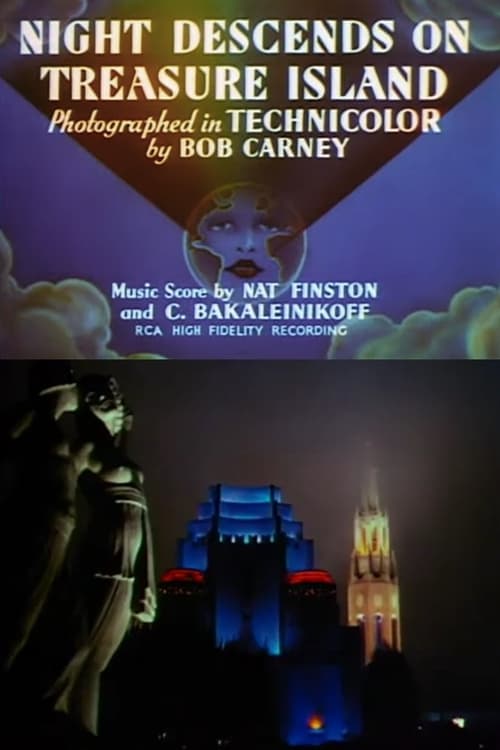
Night Descends on Treasure Island
1940
No user ratings available yet
Diversity score: 1.9 out of 10
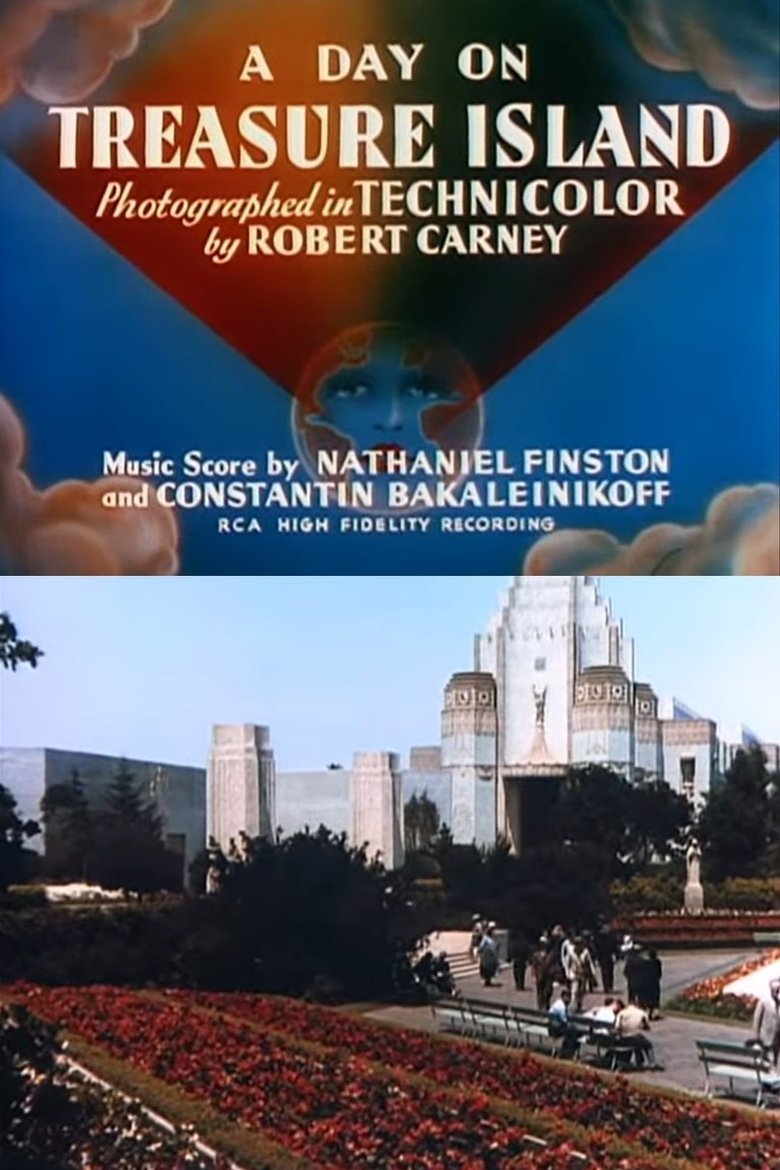
1939
ApprovedRuntime
10 minutes
Average Rating
No ratings yetSynopsis
This Traveltalks entry visits the Golden Gate International Exposition. Sponsored by 11 western states of the United States and 28 foreign countries, this "world's Fair of the West" was built on Treasure Island, a man-made island in San Francisco Bay. Viewers see the exteriors of many exhibition halls and the pavilions of foreign nations. The art, sculpture, and flowers on display are also featured.
Overall Score
Limited
Category Breakdown
LGBTQ+ Representation
The film lacks any discernible character arcs or interpersonal narratives. As a documentary focused on architecture and flora, there is no evidence of LGBTQ+ identities or queer-coded subtext.
Gender Representation
Women appear only as part of the general public or background crowds. They are not afforded individual agency or roles that challenge the traditional gender hierarchies of 1939.
Racial & Ethnic Diversity
The presence of international pavilions implies a multicultural setting. However, the lens prioritizes a Western architectural perspective rather than active narrative subversion or diverse casting.
Religious & Cultural Diversity
The film celebrates Western institutional achievement and international diplomacy. It serves as a celebratory document of mid-century Western expansion and global connectivity without deconstructing these frameworks.
Disability Representation
The film does not feature characters with visible or invisible disabilities. It does not engage with neurodivergence or physical accessibility as a thematic element.
Strengths
Areas for Improvement
AI Analysis
A Day on Treasure Island functions as a topographical survey of the Golden Gate International Exposition. Because the documentary focuses on exhibition halls, pavilions, and landscape design, the narrative is observational rather than character-driven. While the event's sponsorship by 28 foreign countries suggests a globalized scope, the film remains rooted in the era's Western institutional values. It prioritizes architectural and civic achievements over social representation or individual human stories. Ultimately, the work serves as a standard archival record of its time. It lacks the intentionality required to disrupt or subvert the social hierarchies of the late 1930s.
1940

1927

1943
1942
1953
1937
1956
1941
1937

1944
1940
1942
No reviews yet. Be the first to share your thoughts on this movie!
Use the rating form above to leave a star rating and optional review.