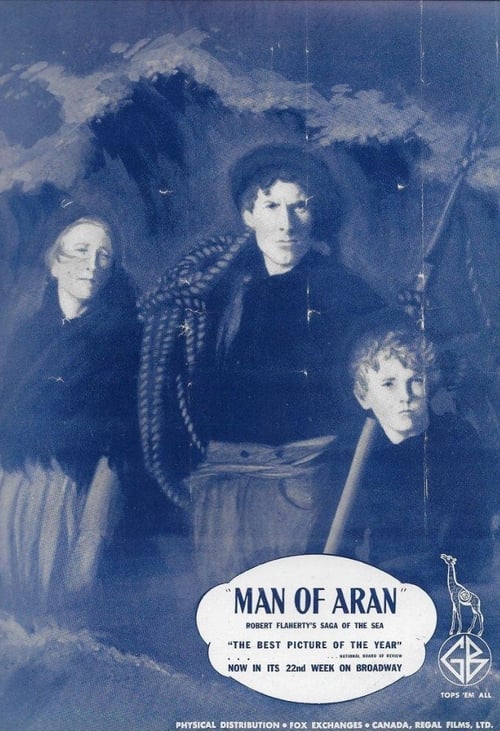
Man of Aran
1934
No user ratings available yet
Diversity score: 2.7 out of 10

1930
NRDirector
H.P. Carver
Runtime
84 minutes
Average Rating
No ratings yetSynopsis
In the Canadian Northwest, the Chippewa tribe struggles to find food before the onset of winter.
Overall Score
Fair
Category Breakdown
LGBTQ+ Representation
The film lacks any evidence of LGBTQ+ characters or non-heteronormative narratives. It appears to follow the strict heteronormative structures typical of 1930s cinema.
Gender Representation
The narrative focuses on tribal survival, likely adhering to traditional gender hierarchies. Female characters are potentially relegated to domestic or supportive roles without driving the plot.
Racial & Ethnic Diversity
The film provides visibility by centering the Chippewa tribe as the primary subjects. This exceeds the era's standard homogeneous Western narratives, though character agency remains unclear.
Religious & Cultural Diversity
The story explores Indigenous survival through a lens that likely reflects Western ethnographic observation. It lacks a critique of power dynamics or modern social deconstruction.
Disability Representation
There is no information regarding the portrayal of physical or neurodivergent disabilities in this work.
Strengths
Areas for Improvement
AI Analysis
The Silent Enemy offers a rare degree of racial visibility for 1930 by centering an Indigenous community. This focus on the Chippewa tribe provides a narrative departure from the era's typical Western-centric stories. However, the film remains constrained by the period's traditionalist frameworks. It lacks intersectional complexity, and the portrayal of gender and culture likely follows standard ethnographic or domestic tropes of the early sound era. Ultimately, while the film succeeds in providing racial representation, it fails to challenge the social hierarchies or provide diverse character agency required for a higher score.
1934
1952
2004

1959
1939

2015
1978
1967
No reviews yet. Be the first to share your thoughts on this movie!
Use the rating form above to leave a star rating and optional review.