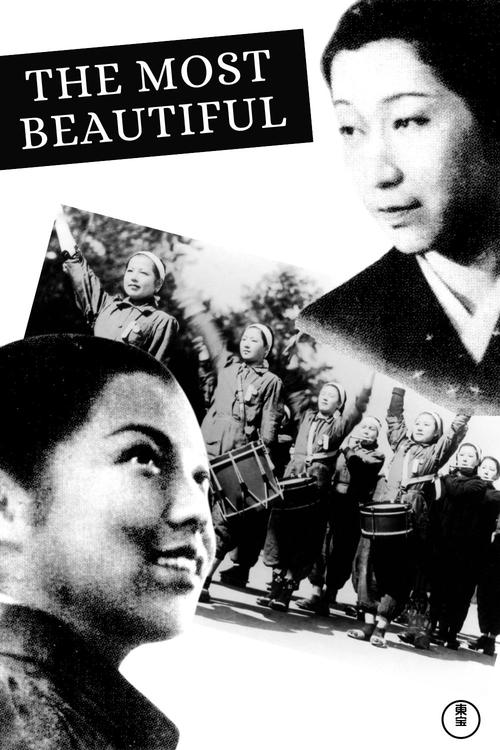
The Most Beautiful
1944
No user ratings available yet
Representation score: 6.4 out of 10

Representation Score
Fair
1949
Director
Ling Zifeng, Qiang Zhai
Runtime
95 minutes
Average Rating
No ratings yetNew Showbiz Analysis
The film opens on the brutal landscape of feudal oppression, immediately establishing the "old society" as a site of suffering that demands revolutionary correction. Billed as a war drama, *Daughters of China* pivots from standard military fare to a political allegory where women are not merely supporting the front but are the front. The camera grants Hu Xiuzhi and her comrades the dignity of active agency, positioning their military competence as the direct antidote to the ineptitude and cruelty of the feudal class. This is not a subtle critique; it is a direct assertion that the traditional hierarchy is illegitimate and that the new revolutionary order is the only viable path to justice. The sold meaning is clear: individual suffering is resolved only through collective political action. The film’s internal logic is consistent in its elevation of the collective over the individual, treating the nuclear family and traditional gender roles as obstacles to be dismantled rather than foundations to be preserved. The ending rewards the formation of the new order, with the last image affirming that the old structures have been permanently displaced. There is no ambiguity in the moral verdict; the camera loves the revolutionary woman who has shed her traditional constraints to fight for the nation. As a 1949 work, it sits at the precise moment of the People’s Republic’s founding, printing the legend of the revolution as a liberating force. It destroys the myth of the benevolent feudal lord and replaces it with the image of the empowered peasant woman. The film does not merely depict war; it uses the war to validate a new social contract where gender and class hierarchies are inverted in favor of collective merit and national duty. The final frame is a celebration of this new order, leaving no room for the old ways to return.
Category Breakdown
Absent. The narrative focuses on class struggle and national defense; no same-sex intimacy or queer identity is depicted.
Present. Women serve as the military and moral core, fighting Japanese invaders in Manchukuo. Traditional domestic roles are inverted as female competence drives the plot’s resolution.
Limited. The cast is entirely Chinese, reflecting the specific national context of the Volunteer Army. No non-Asian characters are present to challenge or complicate the ethnic frame.
Present. The film positions the Communist revolutionary order as the sole path to liberation, framing feudal tradition as oppressive. Collective national duty supersedes individual or familial loyalty in the final verdict.
Absent. No characters with physical or cognitive impairments are depicted or central to the narrative arc.
Present on Screen
Limited or Absent
Official Synopsis
Women play a heroic role in the Volunteer Army fighting the Japanese in the puppet state of Manchukuo.
1944
2008

1961
1972
1942
1960
1971
1959
No reviews yet. Be the first to share your thoughts on this movie!
Use the rating form above to leave a star rating and optional review.