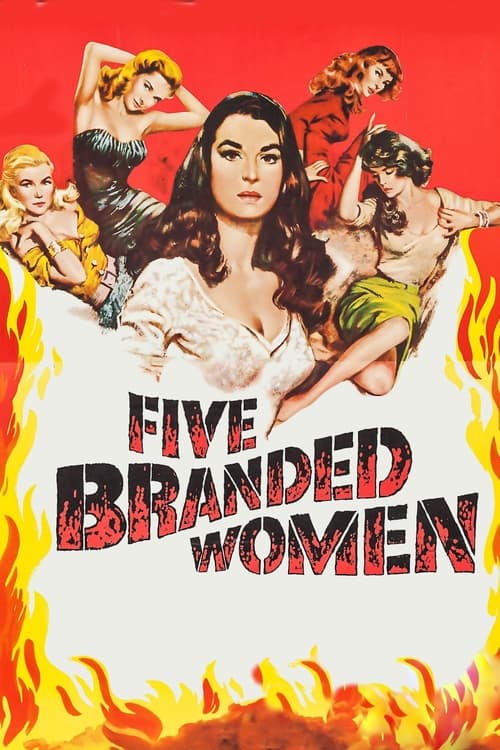
Five Branded Women
1960
No user ratings available yet
Representation score: 5.7 out of 10

Representation Score
Limited
1961
Director
Georges Lautner
Runtime
100 minutes
Average Rating
No ratings yetNew Showbiz Analysis
The film contrasts its limited demographic scope with a progressive exploration of gendered power dynamics. Despite the historical context that restricts racial and LGBTQ+ diversity, the narrative avoids the typical 'victimhood' clichés often seen in wartime dramas. By highlighting how underrepresented groups reclaim control, the film destabilizes dominant military structures. Through the portrayal of women as strategic agents of resistance, the narrative adds a sophisticated layer to the wartime setting. Ultimately, the film's strength lies in its moral relativism, critiquing rigid social institutions by illustrating how survival requires abandoning traditional morality, providing a nuanced perspective on life under occupation.
Category Breakdown
The film does not include any LGBTQ+ characters or narratives. The interpersonal relationships stay within the traditional social and biological structures of the 1940s.
Women play active roles in ensuring survival rather than being passive victims. They use strategic thinking and social manipulation to navigate and challenge male-dominated military hierarchies.
The cast is primarily made up of people from similar backgrounds, reflecting the demographics of a rural French village in 1944. There is minimal diversity in terms of race and ethnicity.
The story questions traditional Western values such as honesty, framing deception as a necessary tool for resisting occupation. It deconstructs conventional social norms in favor of pragmatic survival strategies.
The film does not focus on characters with visible or invisible disabilities. No characters with disabilities serve as central plot devices.
Present on Screen
Limited or Absent
Official Synopsis
In 1944, in a small village in Calvados, just as the Allies landed, a British plane was shot down. The wounded pilot seeks help. All the villagers, who speak only of resistance, refuse to help, for fear of reprisals. Only the mayor, Dr. Leproux, takes him in and nurses him back to health, then entrusts him to the Resistance. But the Germans get wind of the story and arrest Leproux. He is saved by Major Frantz. But the budding friendship between these two men "doesn't stop the drums", and the war is on.
1960

1960
1966
2017
2003
1958

1971
2005
No reviews yet. Be the first to share your thoughts on this movie!
Use the rating form above to leave a star rating and optional review.