Small Town Girl
1953
No user ratings available yet
Diversity score: 2.3 out of 10
1939
NRDirector
Andrew L. Stone
Runtime
91 minutes
Average Rating
No ratings yetSynopsis
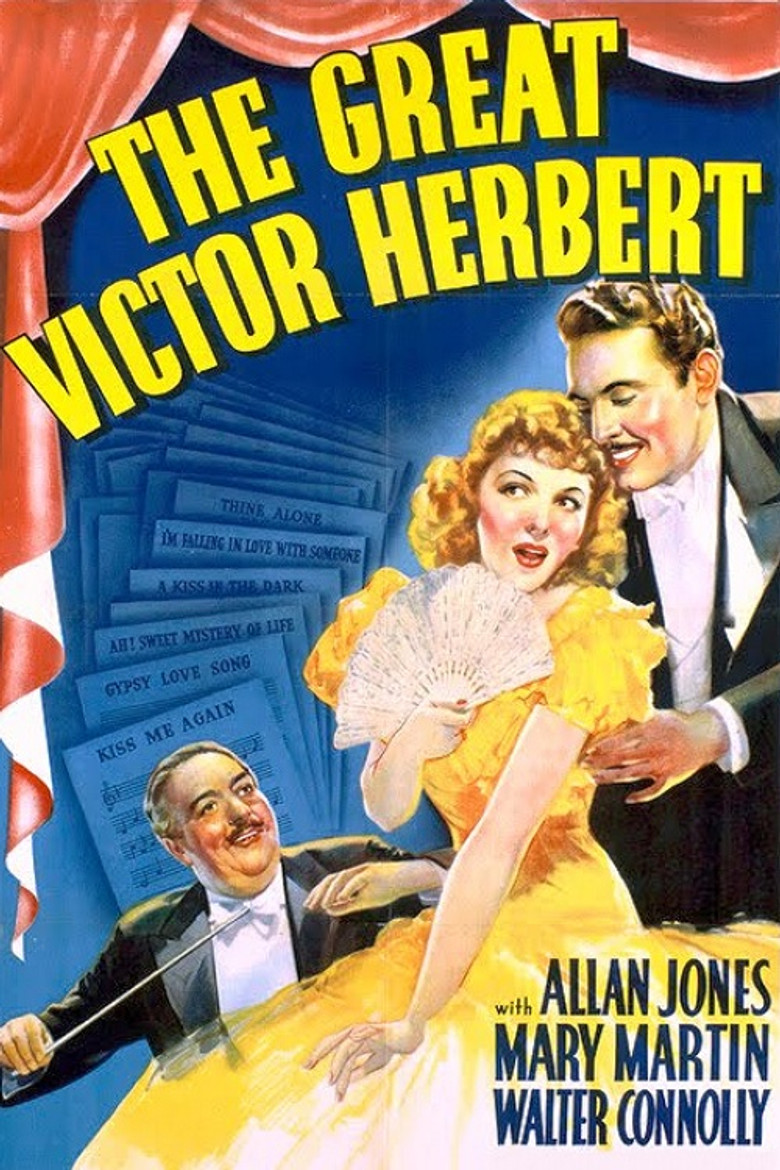
In his last film assignment, portly Walter Connolly fills the title role (in more ways than one) in The Great Victor Herbert. Very little of Herbert's life story is incorporated in the screenplay (a closing title actually apologizes for the film's paucity of cold hard facts); instead, the writers allow the famed composer's works to speak for themselves. In the tradition of one of his own operettas, Herbert spends most of his time patching up the shaky marriage between tenor John Ramsey (Allan Jones) and Louise Hall (Mary Martin). Many of Herbert's most famous compositions are well in evidence, including "Ah! Sweet Mystery of Life", "March of the Toys" and "Kiss Me Again", the latter performed con brio by teenaged coloratura Susanna Foster. Evidently, the producers were able to secure the film rights for the Herbert songs, but not for the stage productions in which they appeared, which may explain such bizarre interpolations as having a song from Naughty Marietta.
Overall Score
Minimal
Category Breakdown
LGBTQ+ Representation
The film lacks any evidence of non-cisnormative identities or same-sex intimacy. It adheres strictly to the heteronormative romantic standards of 1939.
Gender Representation
Female characters like Mary Martin and Susanna Foster are central to the musical spectacle. However, their roles remain tied to traditional romantic tropes and domestic stability.
Racial & Ethnic Diversity
The production reflects the homogeneous casting norms of the late 1930s. It focuses on an Anglo-centric musical legacy with no indication of diverse casting.
Religious & Cultural Diversity
The film serves as a nostalgic tribute to Western musical achievement. It reinforces traditional values like marriage and classical operatic traditions without deconstructing them.
Disability Representation
There are no visible or invisible disabilities integrated into the character arcs. The plot does not address disability in any capacity.
Strengths
Areas for Improvement
AI Analysis
The Great Victor Herbert functions primarily as a musical tribute rather than a vehicle for social commentary. It prioritizes the preservation of musical heritage and romantic escapism over the subversion of social hierarchies. As a product of 1939, the film reinforces the era's conventional social structures. The narrative focuses on stabilizing a heterosexual marriage and celebrating Western musical traditions, offering little room for intersectional representation. Ultimately, the film is a period-typical celebration of Anglo-centric culture. It lacks the intentionality required to challenge or expand upon the standard identity norms of the Hollywood studio system.
1953

1954
1935
1941

1934
1936
1943
1937
1944
1933
1938
1937
No reviews yet. Be the first to share your thoughts on this movie!
Use the rating form above to leave a star rating and optional review.