Death in Venice
1971
No user ratings available yet
Representation score: 6.4 out of 10
Representation Score
Fair
1969
GPDirector
Jaime Camino
Runtime
106 minutes
Average Rating
No ratings yetNew Showbiz Analysis
Jaime Camino’s drama succeeds as a character study that challenges 1960s period clichés. It finds its strength in the intellectual dominance of its female lead, George Sand, who navigates a hostile environment who play a significant role in driving the story. The film's primary weakness lies in its narrow demographic scope. The narrative relies on a binary tension between Western European protagonists and the local Mediterranean community, which limits multi-layered depth. Ultimately, the film is a critique of traditional social structures. It uses the friction between foreign intellectuals and local traditionalism to prioritize psychological realism over state-sanctioned idealism.
Category Breakdown
The film explores the intense, unconventional romantic bond between George Sand and Frédéric Chopin. It portrays a strong, non-traditional relationship that challenges the typical domestic roles of the time.
George Sand serves as the main driver of the narrative, challenging period expectations of feminine passivity. Her intellectual and assertive presence defies traditional gender roles.
The story highlights tension between European intellectuals and the local Mallorcan population. However, it relies on a binary framework that often 'others' the local community to create atmospheric tension.
The film critiques rigid social mores by portraying local institutions as cold and obstructive. It prioritizes individual subjective truth over communal or religious harmony through Sand's literary response to her environment.
There is no evidence of characters with visible or invisible disabilities being utilized as central plot devices or portrayed with specific ability to act.
Present on Screen
Limited or Absent
Official Synopsis
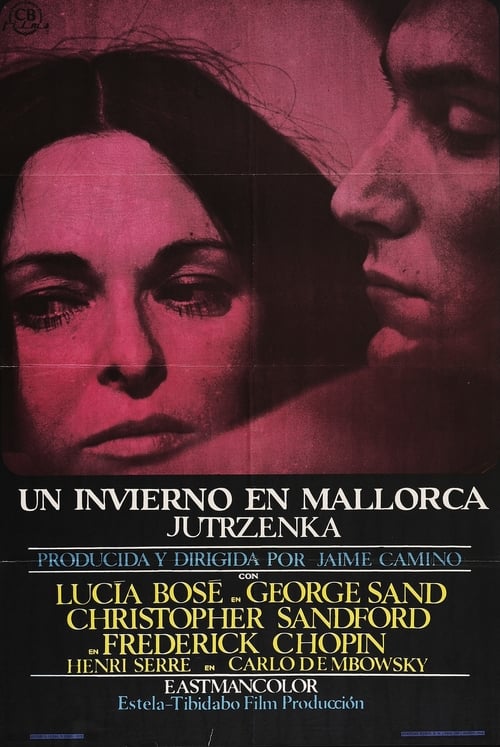
The cigar-smoking French writer, George Sand (Lucia Bose) and her lover, the composer-pianist Chopin (Christopher Sandford) have rented a former monastery in Mallorca as a winter retreat. They have even shipped a piano to the site, so that Chopin can continue his work. However, what promised to be a warm, sunny vacation turns sour as the locals disapprove of Sand, the servants are surly and mysterious, and the monastery is cold. She has her revenge, however. She wrote the book A Winter in Mallorca about her miserable winter retreat. This film follows that book closely, with concern for historical accuracy, which did not increase the Spanish filmmakers' popularity with their countrymen.
1971
1975
1947
1996
1991
2018

1991

2009
No reviews yet. Be the first to share your thoughts on this movie!
Use the rating form above to leave a star rating and optional review.