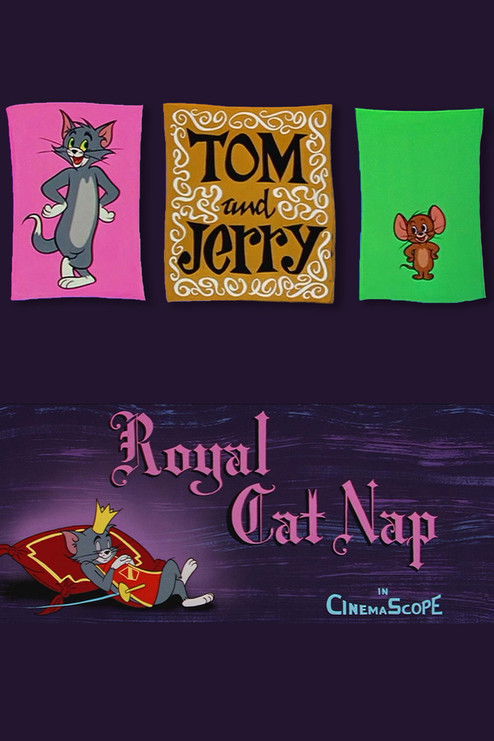
Royal Cat Nap
1958
No user ratings available yet
Representation score: 0.4 out of 10
Representation Score
Minimal
1952
NRDirector
William Hanna, Joseph Barbera
Runtime
7 minutes
Average Rating
No ratings yetNew Showbiz Analysis
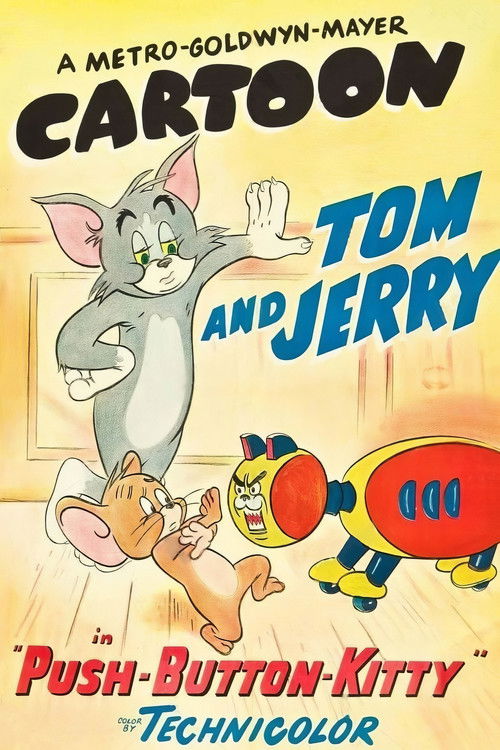
Push-Button Kitty is a classic mid-century cartoon that prioritizes slapstick humor over exploring social issues. The story is designed to reinforce traditional domestic values and utility, rather than disrupt them. Characters serve primarily as vehicles for physical gags. Since the cast consists solely of anthropomorphic animals, the film avoids identity-driven narratives, resulting in a lack of meaningful representation across most categories. Ultimately, the film reflects the era's emphasis on homogeneity. It focuses on replacing a 'lazy' individual with a productive machine, aligning with 1950s ideals of efficiency and household order.
Category Breakdown
The story centers on the rivalry between anthropomorphic animals and does not include any non-traditional gender identities or critiques of the assumption that everyone is straight.
Mammy is portrayed as a traditional household authority figure, reinforcing typical gender roles without challenging the idea that men are stronger or more intelligent.
The setting features only anthropomorphic animals in a homogeneous environment, avoiding any racial identifiers and lacking diverse casting or narrative elements that highlight cultural differences.
The story emphasizes mid-century Western domestic values and efficiency. The robot Mechano represents a technological solution to household issues, maintaining the status quo.
Physical comedy relies on slapstick violence and temporary dysfunction, serving as comedic gags rather than meaningful representations of permanent disabilities or neurodivergence.
Present on Screen
Limited or Absent
Official Synopsis
Tom's being especially lazy, which makes it even easier for Mammy to toss him out when her new mouse-catching robot cat, Mechano, arrives. Mechano is frighteningly efficient, foiling several attempts by Jerry. Jerry turns this efficiency against him by unleashing several mechanical mice; the zealous robot makes a shambles of the house, and finally itself, in the process of chasing them down. Tom is welcomed back, but at the last moment, a key part of the robot had gone down Tom's throat; Jerry activates it, and sends Tom chasing after one of the wind-up mice.
1958
1946
1949
1952
1947
1949
1941
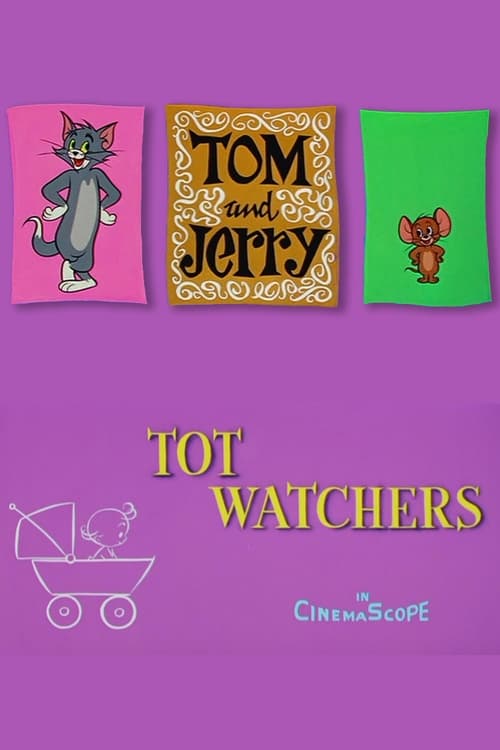
1958
No reviews yet. Be the first to share your thoughts on this movie!
Use the rating form above to leave a star rating and optional review.