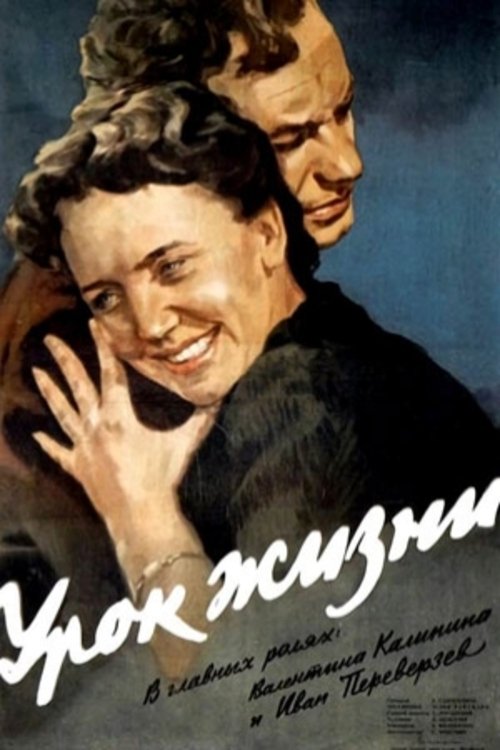
The Lesson of Life
1955
No user ratings available yet
Representation score: 2.8 out of 10
Representation Score
Limited
1954
Director
Viktor Ivchenko, Isaak Shmaruk
Runtime
99 minutes
Average Rating
No ratings yetNew Showbiz Analysis
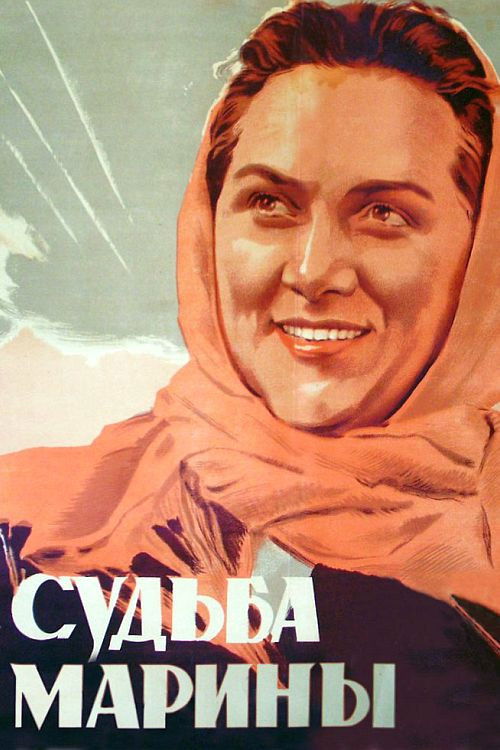
Marina's Destiny is a progressive exploration of female empowerment within the mid-1950s Soviet cinema. The film effectively challenges the 'abandoned wife' cliché by presenting Marina's marital dissolution as a catalyst for professional independence and intellectual pursuits. However, the film's scope is limited. It lacks representation for LGBTQ+ identities and individuals with disabilities, focusing instead on a specific social realism centered on the working class and collective advancement. Ultimately, the film's strength lies in its narrative structure, which shifts the focus from domesticity to academic and labor-driven empowerment.
Category Breakdown
The film centers on traditional marriage structures and their breakdown. There are no characters with non-binary gender identities or critiques of the assumption that everyone is straight.
Marina challenges traditional gender roles by emphasizing intellectual development over household duties. Her significant role in driving the story transforms her from a passive wife into an independent professional.
The cast likely mirrors the ethnic uniformity of the 1950s Soviet period. While there is no explicit multi-ethnic integration, the film avoids obvious racial stereotypes.
The story dismantles the traditional nuclear family in favor of collective progress. It prioritizes specialized skills and state-focused values over conventional domestic life.
There are no characters with visible or hidden disabilities included in the story.
Present on Screen
Limited or Absent
Official Synopsis
Terenty leaves the collective farm and goes to the city to study to become an agronomist. Marina works hard and looks forward to her husband's return. When her husband returns home, he reproaches his wife for being uneducated, asks for a divorce and leaves for the city. Left with her daughter, Marina devotes herself entirely to her studies and work.
1955

1930

1931

1961
1953
1956

1963
1929
No reviews yet. Be the first to share your thoughts on this movie!
Use the rating form above to leave a star rating and optional review.