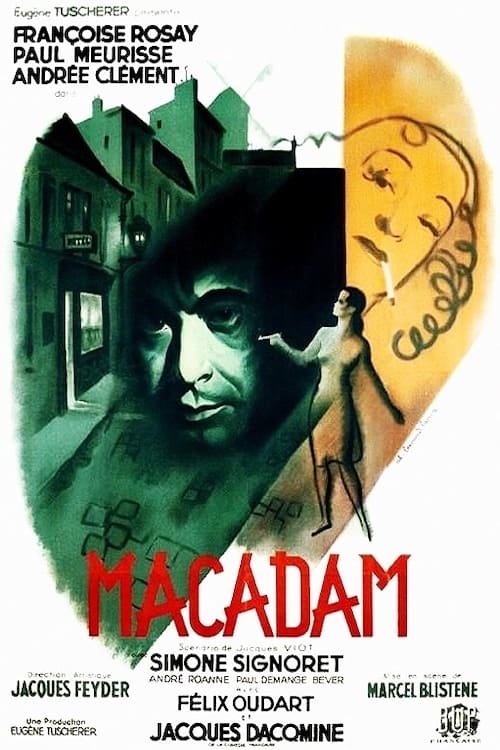
Back Streets of Paris
1946
No user ratings available yet
Diversity score: 3.9 out of 10

1958
Director
François Villiers
Runtime
96 minutes
Average Rating
No ratings yetSynopsis
The heroine in L'Eau Vive is the unwilling heir to a fortune. Young Hortense (Pascale Audret) has always known that her family was greedy, but until she inherits her father's hidden millions she has no idea how loathsome her relatives could be. Surrounded on all sides by grubby, outstretched hands, Hortense takes some comfort in the fact that her legacy is still missing. When the money is finally recovered, our heroine does the "right thing" with her windfall, leaving her mercenary family empty-handed. Throughout the film, Hortense's dilemma is likened to a government dam project not far from her home; as the bridge grows in size, so too does Hortense's resolve to rise above the nastiness all around her.
Overall Score
Fair
Category Breakdown
LGBTQ+ Representation
The film lacks explicit evidence of LGBTQ+ characters or non-heteronormative identities. The narrative focuses primarily on traditional social dynamics and familial inheritance.
Gender Representation
Hortense disrupts conventional female passivity by exercising significant agency. She navigates a predatory patriarchal structure and asserts her autonomy by controlling the distribution of her family's wealth.
Racial & Ethnic Diversity
The drama focuses on local class dynamics within a homogeneous social structure. There is no indication of racial blending or a diverse cast within this period-specific setting.
Religious & Cultural Diversity
The story critiques Western institutions like the nuclear family and capital accumulation. It prioritizes individual morality over greed, using a dam project as a metaphor for moral resolve.
Disability Representation
There is no documented evidence of characters with visible or invisible disabilities in this work.
Strengths
Areas for Improvement
AI Analysis
L'Eau Vive is a mid-century French drama that finds its strength in narrative subversion rather than demographic variety. While the cast and setting reflect the homogeneous social structures of 1958, the film moves beyond simple period tropes through its character development. The protagonist, Hortense, serves as a powerful vehicle for challenging traditional power dynamics. By rejecting her mercenary relatives, she transforms a standard inheritance plot into a study of individual ethics against systemic greed. However, the film remains limited by its era's lack of intersectional representation. It functions primarily as a critique of bourgeois class structures rather than a diverse exploration of identity.
1946

1961

1925

1960

1954

1965

1969

1979

1968

1972
1970

1961
No reviews yet. Be the first to share your thoughts on this movie!
Use the rating form above to leave a star rating and optional review.