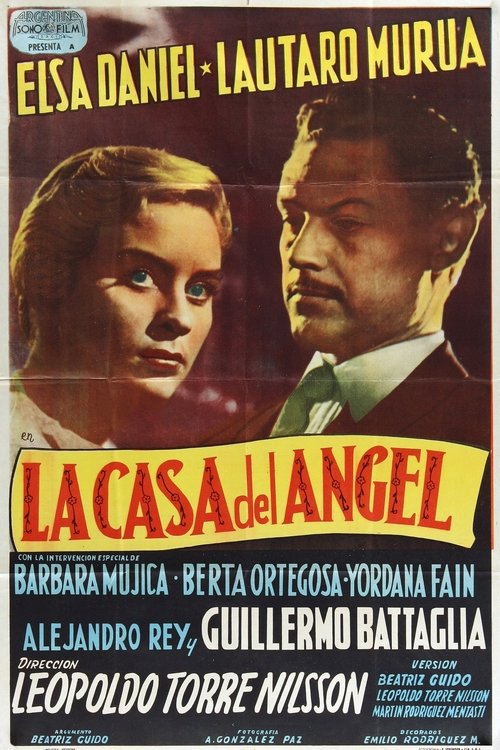
The House of the Angel
1957
No user ratings available yet
Diversity score: 6.2 out of 10
1960
Director
Leopoldo Torre Nilsson
Runtime
84 minutes
Average Rating
No ratings yetSynopsis
This routine drama set in Argentina during the 1930s draws parallels between a family patriarch and a political despot who stoops to any corrupt means to increase his power and wealth. The parallels are easy to make because the man is the same in both cases. The grandfather in the family has a rigid, tight-fisted control over his grandchildren, who eventually begin to rebel against his authoritarian and ironically puritanical behavior. At first, there is no real awareness of his opposite, criminal behavior outside the home. But as one of the grandsons begins to mature in his political savvy, the grandfather comes under well-deserved fire at last.
Overall Score
Fair
Category Breakdown
LGBTQ+ Representation
The film lacks explicit evidence of LGBTQ+ characters or non-heteronormative identities. The narrative centers on a patriarchal family structure that emphasizes traditional lineage.
Gender Representation
The story critiques traditional masculinity by portraying the patriarch as a corrupt, authoritarian figure rather than a stable leader. The grandchildren's rebellion suggests a subversion of established gendered power structures.
Racial & Ethnic Diversity
Set in 1930s Argentina, the film likely reflects the dominant socio-economic class of the era. While systemic inequities are implied through political themes, specific racial diversity remains unconfirmed.
Religious & Cultural Diversity
The film critiques Western institutional pillars by paralleling family patriarchy with political despotism. It frames centralized power and rigid family units as inherently oppressive and corrupt.
Disability Representation
There is no mention of characters with visible or invisible disabilities within the narrative.
Strengths
Areas for Improvement
AI Analysis
Leopoldo Torre Nilsson’s drama serves as a sophisticated critique of institutionalized authority. By drawing parallels between a corrupt grandfather and a political despot, the film deconstructs the traditional patriarch as a symbol of systemic oppression. The work achieves a progressive edge through its thematic focus on dismantling rigid hierarchies. It favors individual agency and political awakening over the preservation of established social orders. However, the film lacks modern identity-based representation. It focuses heavily on class and power dynamics, leaving gaps in visible LGBTQ+ or disability representation.
1957
1963
1982

1947

1962
1962

2000
1988

1970

2000

1984
2010
No reviews yet. Be the first to share your thoughts on this movie!
Use the rating form above to leave a star rating and optional review.