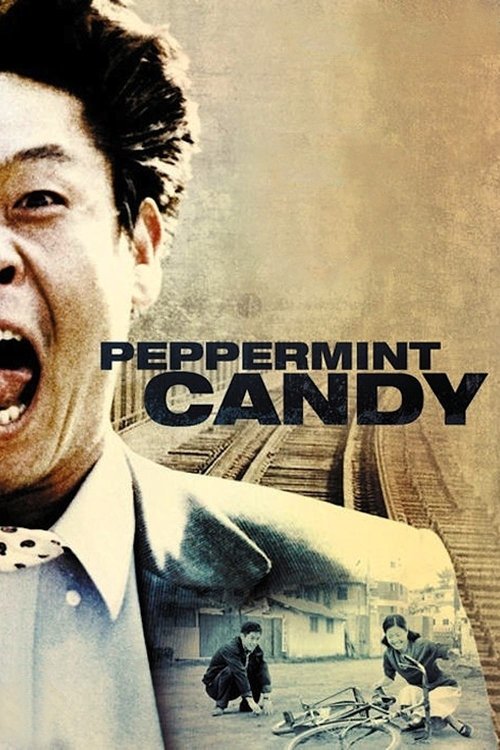
Peppermint Candy
2000
No user ratings available yet
Diversity score: 6.3 out of 10

1997
Director
Lee Chang-dong
Runtime
111 minutes
Average Rating
No ratings yetSynopsis
Returning home and finding his town drastically changed, a former soldier falls in with gangsters.
Overall Score
Fair
Category Breakdown
LGBTQ+ Representation
The film operates within a strictly heteronormative framework. It focuses on male camaraderie and gang hierarchies without any discernible LGBTQ+ characters or narratives.
Gender Representation
The narrative is defined by a rigid, male-centric hierarchy. Female characters occupy peripheral roles, often serving as catalysts for male protagonists rather than driving the plot with independent agency.
Racial & Ethnic Diversity
As a localized South Korean production, the cast is culturally homogeneous. It centers the specific lived experiences of the Korean working class rather than presenting a multi-ethnic cast.
Religious & Cultural Diversity
The film excels in its critique of economic structures and rapid modernization. It portrays the transition to hyper-capitalism as a force that disenfranchises individuals and blurs moral lines.
Disability Representation
There is no significant focus on physical or neurodivergent identities. The characters' struggles are primarily socioeconomic and psychological, centered on disillusionment and loss of innocence.
Strengths
Areas for Improvement
AI Analysis
Lee Chang-dong’s *Green Fish* is a masterclass in social realism that prioritizes systemic critique over demographic breadth. While the film lacks diversity in terms of gender, LGBTQ+ representation, and disability, it compensates through a profound exploration of Korean cultural and economic shifts. The narrative deconstructs the myth of upward mobility within a hyper-capitalist landscape. It uses a crime drama framework to examine how rapid modernization and economic expansion can erode traditional social stability and individual morality.
2000

2010

2018
1999

2005
1992

2002
2007

2017
1989

1961
2001
No reviews yet. Be the first to share your thoughts on this movie!
Use the rating form above to leave a star rating and optional review.