
4 Days in May
2011
No user ratings available yet
Diversity score: 3.9 out of 10
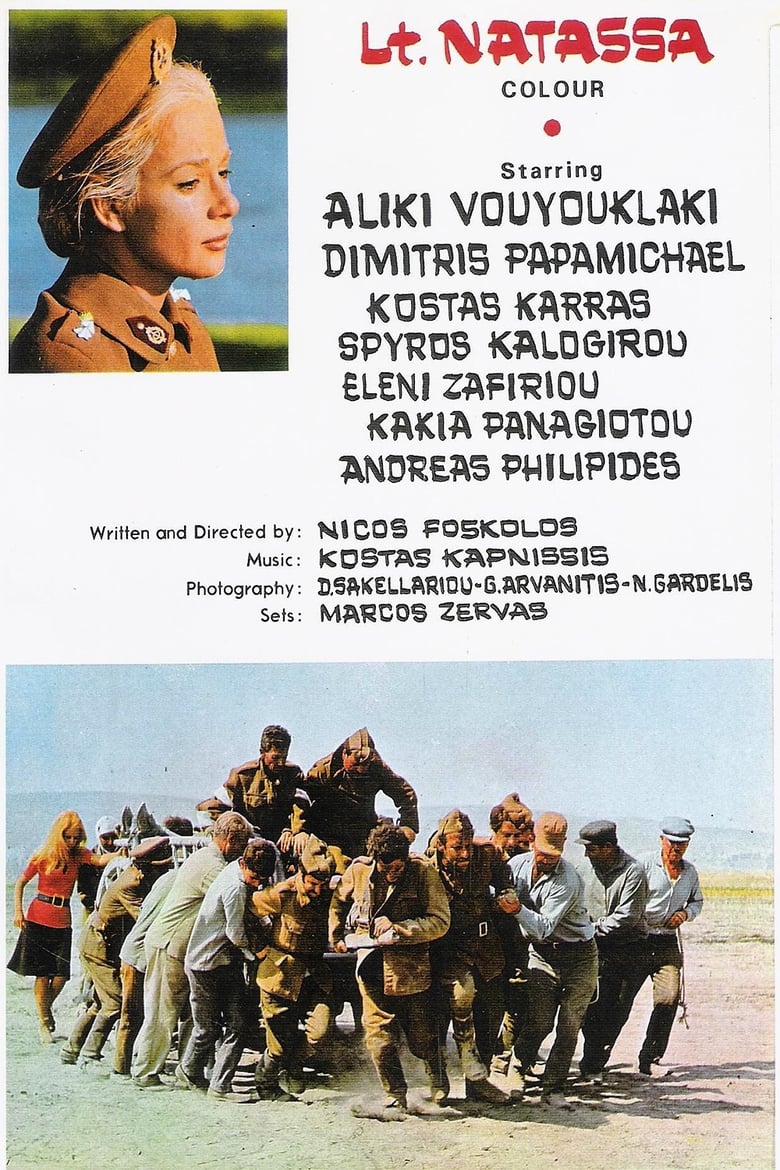
1970
Director
Nikos Foskolos
Runtime
136 minutes
Average Rating
No ratings yetSynopsis
The year is 1965. Natasa Arseni visits Dachau, the place where she was found by the Americans at the end of the World War II. She returns to Greece, and during the train ride she recalls those past events. Before the beginning of the Greek-Italian war, she met Orestis . With the German invasion, Orestis, who was an officer in the Greek army, left for the Middle East. She followed him and accompanied him back to occupied Greece on a mission. She was arrested, interrogated and tortured and was finally sentenced to execution.
Overall Score
Fair
Category Breakdown
LGBTQ+ Representation
The film centers on a heterosexual romantic arc between Natassa and Orestis. It adheres to conventional romantic tropes of the era without presenting non-cisnormative identities or same-sex intimacy.
Gender Representation
Natassa provides a nuanced look at female agency within a patriarchal military framework. She challenges the passive victim trope through her intellectual and emotional resilience during wartime occupation.
Racial & Ethnic Diversity
The cast is predominantly Greek, reflecting the localized historical setting of the Mediterranean theater. It avoids whitewashing by focusing on the authentic ethnic experience of the Greek resistance.
Religious & Cultural Diversity
The narrative critiques rigid military and state authority during wartime. It prioritizes individual morality and personal honor over blind adherence to oppressive institutional or nationalistic mandates.
Disability Representation
There is no evidence of characters with disabilities being portrayed with agency. While the film explores wartime trauma, these elements serve the melodrama rather than exploring neurodivergence or disability.
Strengths
Areas for Improvement
AI Analysis
Lieutenant Natassa is a sophisticated war melodrama that succeeds in subverting traditional gender roles. By placing a woman's survival and internal struggle at the center of a male-dominated genre, the film offers a progressive look at female agency. However, the film remains limited by its historical and cultural context. It lacks modern intersectional markers, offering very little in the way of LGBTQ+ representation or intentional ethnic diversity beyond the specific Greek setting. Ultimately, the film's strength lies in its critique of state power and its complex characterization of women, even as it remains tethered to the social constraints of its era.
2011

1970

1966

1996

1942

1966

1949

1983

1973

1974

1962

1963
No reviews yet. Be the first to share your thoughts on this movie!
Use the rating form above to leave a star rating and optional review.