
Tattooed Flower Vase
1976
No user ratings available yet
Representation score: 5.8 out of 10
Representation Score
Limited
1973
Director
Chūsei Sone
Runtime
72 minutes
Average Rating
No ratings yetNew Showbiz Analysis
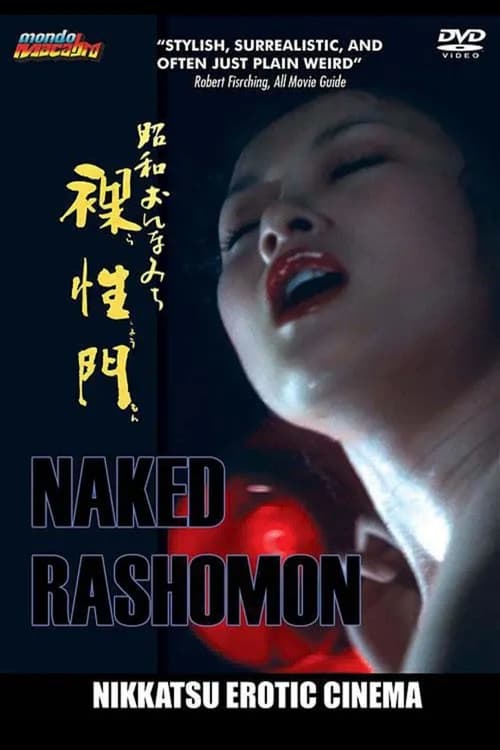
Naked Rashomon is a period melodrama that uses the cruelty of class hierarchies to drive its plot. The story focuses on the systemic abandonment of a woman and her children by a powerful aristocrat, framing the struggle for survival against institutional authority. While the film lacks modern markers like LGBTQ+ representation or multi-ethnic casting, it provides a critique of traditional social structures. It shifts the focus from the stability of the elite to the victimization of the underrepresented. Ultimately, the film functions as a study of individual ability to act versus rigid societal power, though it remains rooted in the demographic and narrative conventions of 1970s Japanese genre cinema.
Category Breakdown
The film does not include any LGBTQ+ narratives or non-straight identities. The central conflict revolves around traditional patriarchal and reproductive dynamics.
The story centers on a woman fighting against patriarchal oppression. While the Marquis embodies dominant, controlling masculinity, the female protagonist's survival suggests a subversion of typical submissive roles.
As a 1973 Japanese production, the film is culturally specific to its domestic setting. It adheres to the homogeneous demographic norms of its era without multi-ethnic blending.
The narrative critiques traditional class-based institutions by portraying the aristocracy as corrupt. It prioritizes the experiences of underrepresented figures over the institutional elite.
There is no mention of characters navigating physical or neurodivergent disabilities within the narrative.
Present on Screen
Limited or Absent
Official Synopsis
A marquis' mistress becomes pregnant with fraternal twins. He keeps the boy, but sends his bodyguard to dispose of the mother and the girl. Years later…
1976
1951

1967
1978
1961
1985
1968
1969
No reviews yet. Be the first to share your thoughts on this movie!
Use the rating form above to leave a star rating and optional review.