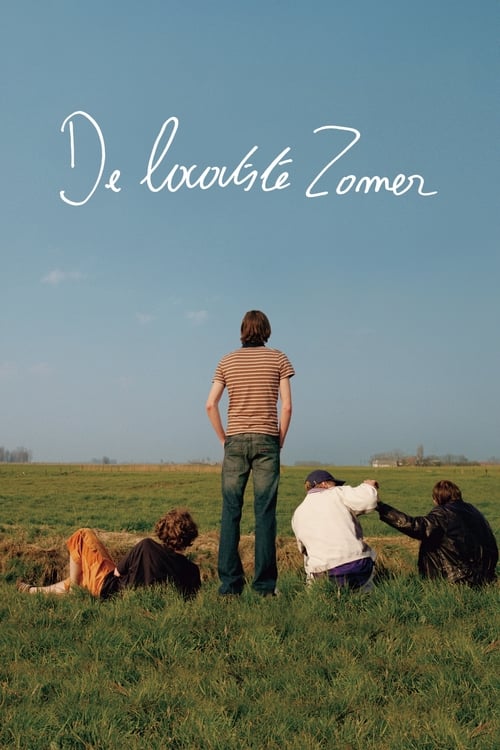
The Last Summer
2007
No user ratings available yet
Diversity score: 3.6 out of 10

2006
Director
Jean-Daniel Verhaeghe
Runtime
97 minutes
Average Rating
No ratings yetSynopsis
A coming-of-age story set in France in the years leading up to World War I. Two teenage boys experience love, loss, anguish and betrayal in a rural setting of great beauty.
Overall Score
Limited
Category Breakdown
LGBTQ+ Representation
The narrative focuses on romantic longing and loss within a pre-WWI French setting. While the era allows for subtextual exploration, there is no explicit evidence of queer identities or critiques of heteronormativity.
Gender Representation
Centered on the coming-of-age experiences of teenage boys, the film leans into classical romantic tropes. There is no evidence of women subverting traditional roles or men being portrayed through lenses of incompetence.
Racial & Ethnic Diversity
Set in rural France, the film likely depicts a homogeneous European cast. The production appears to reflect the demographic realities of the early 20th-century French countryside without diverse casting.
Religious & Cultural Diversity
The story prioritizes individual romanticism and personal anguish over critiques of Western institutions. It does not appear to use secularism or anti-Western sentiment as central pillars of its construction.
Disability Representation
There is no discernible mention of characters navigating physical, sensory, or neurodivergent conditions. No information is available regarding the presence of disability or the avoidance of related tropes.
Strengths
Areas for Improvement
AI Analysis
The Great Meaulnes functions as a traditional period drama that prioritizes historical immersion over social disruption. It adheres strictly to the demographic and social frameworks of early 20th-century rural France. The film focuses on classical coming-of-age tropes, centering on the emotional lives of teenage boys. This focus results in a narrative that lacks intersectional depth or the subversion of established social hierarchies. Ultimately, the work reflects the era it depicts rather than challenging it. It lacks explicit representation of diverse identities, focusing instead on universal themes of love, loss, and betrayal.
2007

1972
2004
2021
1967
1994
2022
1987
2015
1980
2006

2011
No reviews yet. Be the first to share your thoughts on this movie!
Use the rating form above to leave a star rating and optional review.