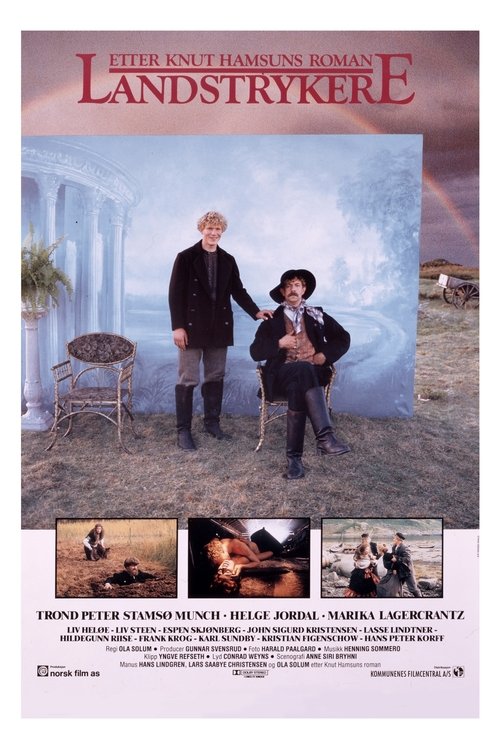
The Wanderers
1989
No user ratings available yet
Diversity score: 4.8 out of 10

1967
Director
Jean-Gabriel Albicocco
Runtime
115 minutes
Average Rating
No ratings yetSynopsis
Rural France, the 1890s. Always in motion, Augustin wanders three times. First, as a youth, while a boarder near Bourges, he's lost in the woods and finds a chateau where an engagement party's in progress: there he falls eternally in love with Yvonne and she with him. Back at school, he hears she is in Paris, so he follows in a vain search and meets a woman, jilted by her lover. In the countryside a few year's later, Augustin's friend François finds Yvonne and brings Augustin to her. They marry, but the next day, Augustin leaves to fulfill a youthful promise he made to Yvonne's brother. François comforts the pregnant Yvonne as they await Augustin's return.
Overall Score
Limited
Category Breakdown
LGBTQ+ Representation
The film centers on a heteronormative romantic arc between Augustin and Yvonne. There is no depiction of non-cisnormative identities or same-sex intimacy.
Gender Representation
Gender roles follow traditional patterns. While Yvonne is central to the emotional plot, her character is defined by her relationship to Augustin and her role as a waiting wife.
Racial & Ethnic Diversity
Set in 1890s rural France, the story focuses on a homogeneous social environment. The narrative lacks any mention of racial blending or diverse casting.
Religious & Cultural Diversity
The film celebrates classical European values like courtship and marriage. It presents a nostalgic view of provincial life without challenging institutional or social norms.
Disability Representation
The narrative does not feature any visible or invisible disabilities as part of the characterizations or plot development.
Strengths
Areas for Improvement
AI Analysis
The Wanderer is a traditional period drama that adheres strictly to the social and romantic conventions of 1890s France. Its narrative architecture prioritizes a singular, idealized pursuit of romantic destiny, which reinforces classical Western storytelling tropes. Because the film focuses on a homogeneous historical setting, it lacks intersectional representation. The character dynamics lean heavily on established gendered roles, emphasizing the male protagonist's agency while relegating the female experience to domestic stability and waiting. Ultimately, the film functions as a nostalgic celebration of provincial life. It reinforces existing social hierarchies rather than attempting to subvert or deconstruct them through diverse perspectives.
1989
1963
1956
1973
1954
1975
1969
2010
2006
1965
1960

2013
No reviews yet. Be the first to share your thoughts on this movie!
Use the rating form above to leave a star rating and optional review.