Venus & Fleur
2004
No user ratings available yet
Representation score: 5.5 out of 10
Representation Score
Limited
2004
Director
Eugène Green
Runtime
126 minutes
Average Rating
No ratings yetNew Showbiz Analysis
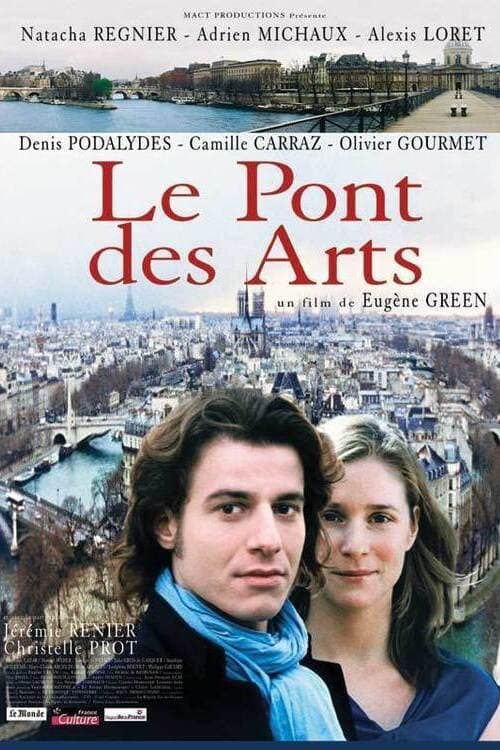
The Bridge of Arts is a visually stylized film that explores classic romantic themes. It stays within traditional cinematic conventions, focusing on a singular romantic arc rather than diverse identities. The film's structure emphasizes timeless beauty and Baroque aesthetics, preserving specific European romantic clichés without challenging existing social hierarchies. Ultimately, it presents a traditional period piece that upholds a homogeneous visual style and conventional courtship structures.
Category Breakdown
The film centers on a traditional romantic relationship. It doesn't include non-binary gender identities or challenge the assumption that everyone is straight.
The story follows a conventional romance between the main characters. The female lead has emotional depth, but the film doesn't challenge traditional gender roles.
The cast is predominantly white, reflecting a European aesthetic. There's no indication of a diverse cast that challenges the historical context.
The story celebrates a traditional French atmosphere. It emphasizes a Eurocentric view of romanticism without addressing broader cultural critiques.
There are no prominent characters with physical or cognitive disabilities. Such characters aren't central to the narrative.
Present on Screen
Limited or Absent
Official Synopsis
The film is a love story which tells the impossible tale of two youths who have never before met. The action unrolls in Paris between 1979 and 1980.
2004
1984

2020

2016
1994
2019

2012
2001
No reviews yet. Be the first to share your thoughts on this movie!
Use the rating form above to leave a star rating and optional review.