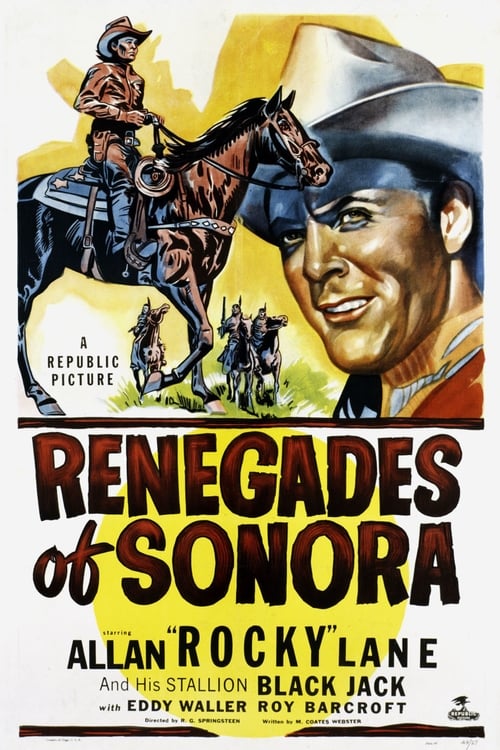
Renegades of Sonora
1948
No user ratings available yet
Representation score: 1.8 out of 10
Representation Score
Minimal
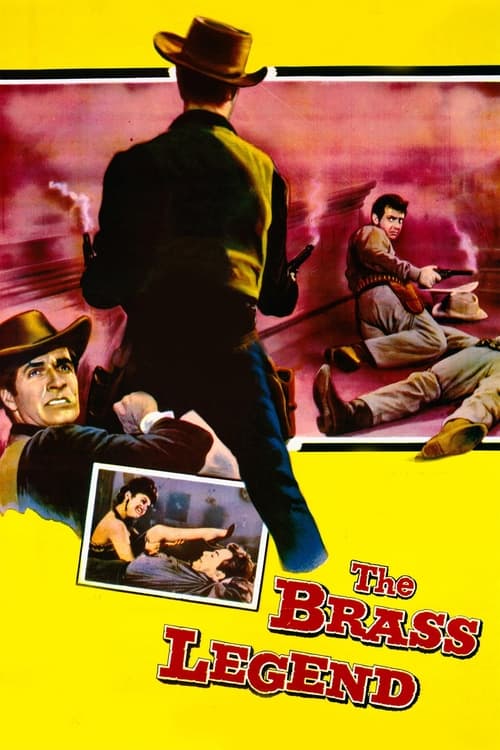
1956
ApprovedDirector
Gerd Oswald
Runtime
79 minutes
Average Rating
No ratings yetNew Showbiz Analysis
The Brass Legend is a typical 1950s Western that emphasizes personal conflicts and traditional social hierarchies. The plot revolves around a boy's discovery of a murderer and the ensuing cycle of revenge, reinforcing conventional genre clichés. Representation is limited by the era's filmmaking standards, focusing on male-driven power dynamics and lacking intentional diversity or critiques of established social roles. Ultimately, the film serves as a typical action piece of its time, lacking the diverse character development and systemic critique needed to go beyond the homogenous portrayals of mid-century Westerns.
Category Breakdown
The film follows traditional mid-century archetypes and does not include any non-conforming gender identities or stories that challenge the assumption that everyone is straight.
Men play key roles in driving the main conflict, while Winnie serves as a plot catalyst following traditional revenge themes.
The story seems to favor the uniform portrayals typical of 1950s Westerns. There are no mentions of non-Anglo-Saxon characters or diverse ethnic groups.
The story operates within the social norms of mid-century America, focusing on law, family, and reputation without challenging Western institutions or promoting secularism.
The synopsis does not provide any information about characters with visible or invisible disabilities. There is no assessment of neurodivergence or physical disabilities.
Present on Screen
Limited or Absent
Official Synopsis
During a ride with his new pony Sinoya, the young Clay Gibson by chance finds the secret housing of the multiple murderer Tris Hatten. He reports immediately to Sheriff Adams, who strongly recommends him not to tell anybody about it. Unfortunately Clay talks to his father nevertheless. He believes Adams just wanted fame and reward for himself and accuses him in the newspaper. Thereby he endangers his son, who's now targeted by a killer which Tris' girlfriend Winnie hired for revenge. Written by Tom Zoerner
1948

1980

1968
1968
1963
1958
1966
1962
No reviews yet. Be the first to share your thoughts on this movie!
Use the rating form above to leave a star rating and optional review.