
Actua 1
1968
No user ratings available yet
Representation score: 6.1 out of 10
Representation Score
Fair
1963
Director
Bertrand Blier
Runtime
95 minutes
Average Rating
No ratings yetNew Showbiz Analysis
Bertrand Blier’s early documentary serves as a sociological time capsule, capturing the ideological ferment of 1963 France. By prioritizing spontaneous dialogue over scripted arcs, the film documents a generational shift toward individualism and skepticism of authority. The work functions as a precursor to the May 1968 upheavals, showcasing a demographic in transition. While it lacks modern multi-layered density, it provides a raw look at the erosion of traditional institutional morality. Ultimately, the film's value lies in its archival documentation of shifting values, moving away from patriarchal stability toward a more fragmented, questioning worldview.
Category Breakdown
The film captures a period when non-traditional gender identities faced many restrictions due to the era's limitations. However, there is a growing sense of questioning the assumption that everyone is straight or cisgender.
The documentary disrupts traditional hierarchies by centering young voices often sidelined in 1960s political discourse. The dialogue reflects a shift toward more fluid, individualistic expressions of identity.
Reflecting the demographic realities of 1963 France, the film lacks significant non-white representation. It primarily serves as a baseline for the era's specific social constraints.
The film shows a strong commitment to inclusion by focusing on subjective morality and secularism. Participants actively question established institutions and traditional Western authority.
There is no evidence regarding the inclusion of participants with visible or invisible disabilities.
Present on Screen
Limited or Absent
Official Synopsis
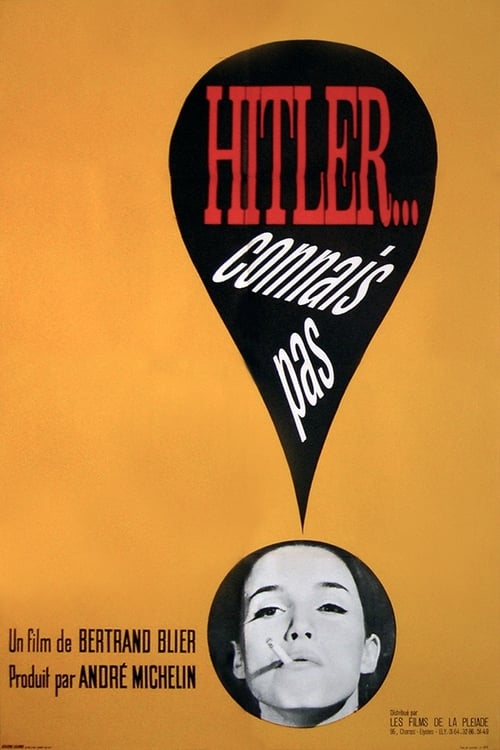
In 1963, 22-year-old Bertrand Blier invited 11 of his peers to come to a film studio and talk about their lives. The record of what was said is a discussion of values that remains relevant and fascinating today. The footage was shot just five years prior to May 1968, and the atmosphere of that time is clearly discernible: these young people may not yet be revolutionaries, but there is clearly a ferment in the air.
1968
1961

1968
1965
1978

1969

2019
1968
No reviews yet. Be the first to share your thoughts on this movie!
Use the rating form above to leave a star rating and optional review.