Men of the Hour
1935
No user ratings available yet
Representation score: 1.3 out of 10
Representation Score
Minimal
1941
ApprovedDirector
Lew Landers
Runtime
62 minutes
Average Rating
No ratings yetNew Showbiz Analysis
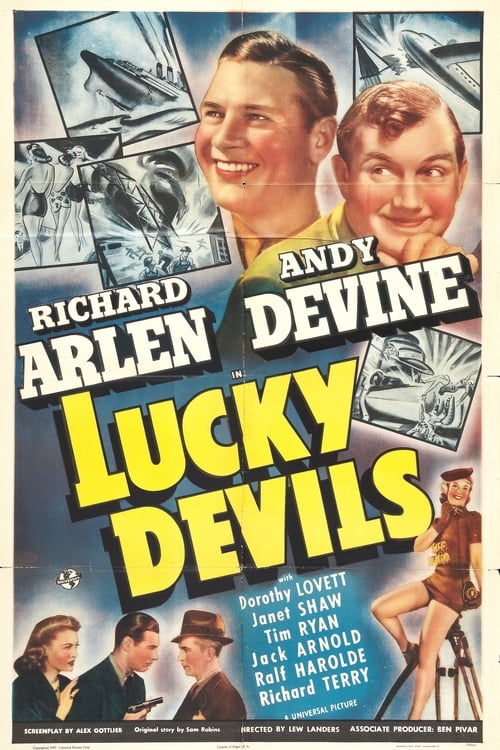
Lucky Devils is a conventional 1941 studio production that follows a traditional adventure-romance structure. The narrative centers on a male-dominated professional environment, focusing on the exploits of newsreel cameramen. Social hierarchies remain unchallenged, as the film relies on established genre clichés of the period. The character dynamics reinforce standard gender roles and Western-centric perspectives common to early 1940s cinema. Ultimately, the film lacks complexity in representing diverse identities, prioritizing professional adventure and traditional romance over varied representation.
Category Breakdown
The film does not include any characters with non-straight identities. The plot revolves around traditional romantic relationships between the male leads and female characters.
Male characters drive the story through their professional roles as newsreel cameramen. Female characters primarily serve as romantic interests and objects of pursuit, lacking active roles.
The film reflects the homogeneous casting practices of 1941 Hollywood. It adheres to the traditional Western-centric casting standards of the era.
The narrative aligns with the social values and romantic clichés of mid-20th century Western society. It operates within the social norms of its time without questioning Western institutions.
There is no information available regarding the depiction of physical or neurodivergent characters in this work.
Present on Screen
Limited or Absent
Official Synopsis
Lucky Devils casts the mismatched duo as a pair of intrepid newsreel cameramen. When they're not risking their lives coverning the Hot Spots of the world, Dick (Arlen) and Andy (Devine) busy themselves romancing Norma (Dorothy Lovett) and Gwendy (Janet Shaw), respectively.
1935

1928
1944
1934
1940
1940

1938
1946
No reviews yet. Be the first to share your thoughts on this movie!
Use the rating form above to leave a star rating and optional review.