The Poisoner
2006
No user ratings available yet
Representation score: 1.4 out of 10
Representation Score
Limited
1962
Director
Georges Franju
Runtime
109 minutes
Average Rating
No ratings yetNew Showbiz Analysis
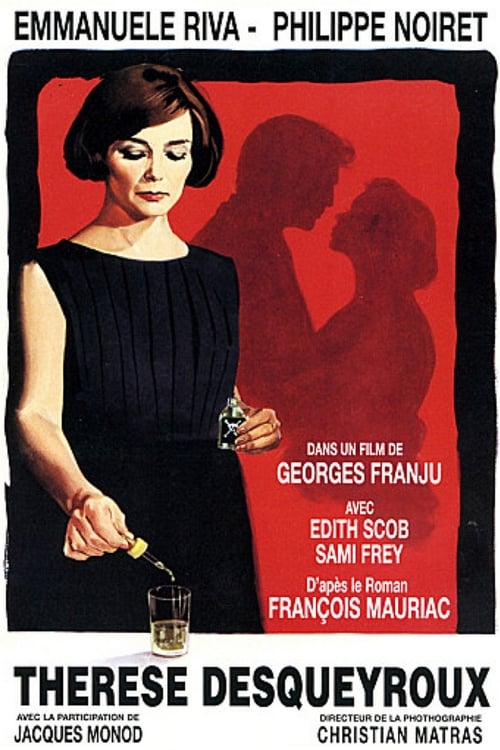
Georges Franju’s film is a psychological study that dismantles gendered social expectations rather than broadening demographic representation. It successfully challenges mid-century domestic norms through its protagonist's strong ability to act. While the film lacks racial and LGBTQ+ diversity, it provides a nuanced critique of Western institutions. It presents the traditional domestic unit as a confining space rather than a stable one. The work is a notable exploration of subverting social norms, focusing on a woman's internal rebellion against a rigid, property-focused hierarchy.
Category Breakdown
The film centers on a restrictive marriage that assumes everyone is straight. Though Thérèse has a deep emotional connection with her sister-in-law, Anne, there is no depiction of same-sex intimacy or non-cisgender identities.
Thérèse challenges traditional gender roles by resisting patriarchal structures. Instead of being a submissive wife, she is a woman driven by her psychological rebellion against a stagnant, property-focused husband.
The setting reflects the demographic uniformity of early 20th-century provincial France. The cast is primarily white, mirroring the social composition of the French upper class during this period.
The narrative questions the sanctity of the nuclear family and strict social codes. It portrays the maintenance of family names and property as oppressive forces that control individual morality.
There are no prominent depictions of physical or neurodivergent disabilities. The story focuses on the psychological and social tensions between the main characters.
Present on Screen
Limited or Absent
Official Synopsis
Thérèse is living in a provincial town, unhappily married to Bernard, a dull, pompous man whose only interest is preserving his family name and property. They live in an isolated country mansion surrounded by servants. Early in her marriage her only comforts are her fondness for Bernard's pine-tree forest, which was her primary reason for marrying him, and her love for her sister-in-law and Bernard's half-sister, Anne. The movie recounts in flashback the circumstances that led to her being charged with poisoning her husband.
2006
1964
2002
1960
1989
1946
1950

1953
No reviews yet. Be the first to share your thoughts on this movie!
Use the rating form above to leave a star rating and optional review.