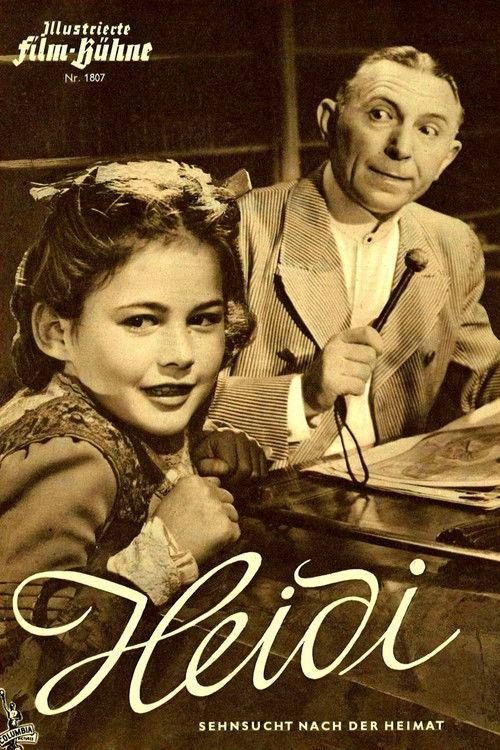
Heidi
1952
No user ratings available yet
Representation score: 2.7 out of 10

Representation Score
Minimal
1937
GDirector
Allan Dwan
Runtime
88 minutes
Average Rating
No ratings yetNew Showbiz Analysis
This 1937 adaptation of *Heidi* functions as a period-specific artifact that emphasizes traditional morality and social stability. The narrative reinforces established hierarchies and classical virtues common to the era, offering a sentimentalized view of family and nature. The film lacks demographic diversity, focusing on a homogeneous European cast and conventional gender roles. While it addresses physical disability through Clara, it does so through a lens of caretaking rather than exploring her personal ability to act. Ultimately, the production serves as a baseline for traditional Western storytelling. It avoids challenging social norms, instead providing a cohesive, traditionalist narrative that lacks multi-layered complexity.
Category Breakdown
The film does not depict LGBTQ+ identities or include any queer subtext. Relationships are based on traditional family and friendship bonds.
Female characters are defined by their nurturing and emotional support roles. Masculinity is portrayed through patriarchal leadership and pastoral work, reinforcing traditional gender roles.
The cast is predominantly European, reflecting the Swiss setting. The narrative centers on a single ethnic identity typical of Western Europe.
The film upholds traditional Western religious and cultural values. It celebrates nature within a framework that supports established social structures.
Clara’s physical limitations play a key role in the plot, but her portrayal focuses on her need for care rather than her personal ability to act.
Present on Screen
Limited or Absent
Official Synopsis
Heidi is orphaned and her uncaring maternal Aunt Dete takes her to the mountains to live with her reclusive, grumpy paternal grandfather, Adolph Kramer. Heidi brings her grandfather back into mountain society through her sweet ways and sheer love. When Dete later returns and steals Heidi away to become the companion of a rich man's wheelchair-bound daughter, the grandfather is heartsick to discover his little girl missing and immediately sets out to get her back.
1952

2015
1965

1945
2005
1946

1955

1939
No reviews yet. Be the first to share your thoughts on this movie!
Use the rating form above to leave a star rating and optional review.