
Heidi
1937
No user ratings available yet
Representation score: 1.8 out of 10
Representation Score
Minimal
1960
Director
René Cardona, Antonio del Amo
Runtime
87 minutes
Average Rating
No ratings yetNew Showbiz Analysis
This 1960 adventure film exemplifies mid-century family cinema, adhering strictly to the social and narrative conventions of its time. The plot centers on traditional heroism and familial longing, avoiding social subversion. While the film provides a Mexican perspective through its setting and characters, it does so within a conventional framework. The pursuit of the American Dream mirrors established Western-centric migration clichés. Ultimately, the film maintains a status quo approach to representation. It lacks efforts to challenge gender hierarchies, explore diverse identities, or critique institutional structures.
Category Breakdown
The film does not depict any non-binary gender identities or same-sex relationships. It follows the traditional assumption that everyone is straight and cisgender.
Male characters, particularly Joselito and Tom Thumb, play key roles in driving the story forward. Traditional male archetypes of bravery and courage are emphasized.
The film offers a Mexican perspective through its setting and characters, providing a non-Anglo-Saxon viewpoint. However, the journey to America cliché reinforces Western ideas of success.
The story is set within a framework of traditional morality and the pursuit of the American Dream. It does not offer critiques of capitalism or Western institutions.
The narrative does not depict any visible or invisible disabilities. Characters operate within a standard folkloric adventure framework.
Present on Screen
Limited or Absent
Official Synopsis
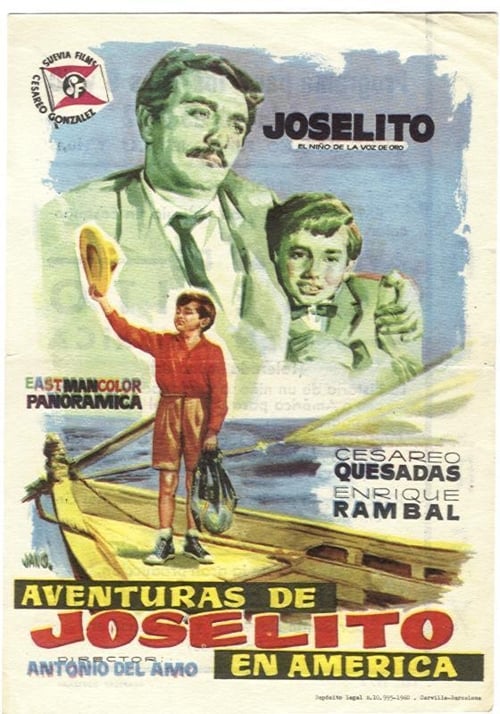
Joselito lives with his grandmother in a fishing village. His father went to America long ago to make a fortune. One day, the boy decides to travel there to meet him. He takes courage and embarks on a fragile boat and miraculously is saved at sea by a vessel that leads him to Mexico where he meets Tom Thumb, a little newsboy who lives many adventures and helps him in the search.
1937

2018
1957

1958

1966

1980

1963

1960
No reviews yet. Be the first to share your thoughts on this movie!
Use the rating form above to leave a star rating and optional review.