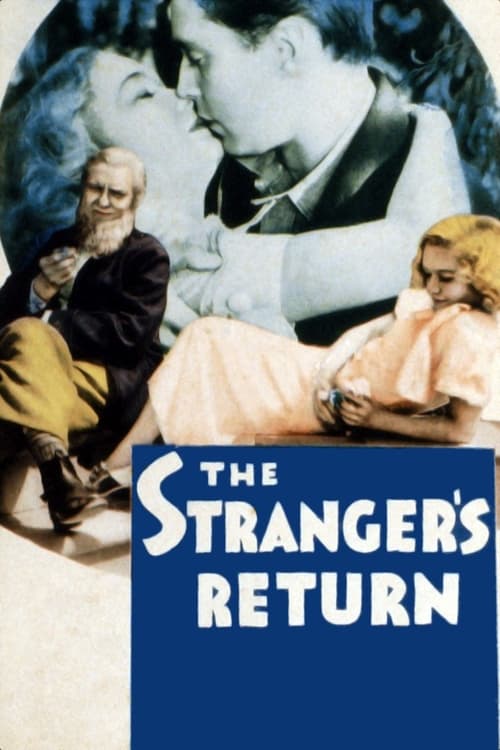
The Stranger's Return
1933
No user ratings available yet
Representation score: 0.4 out of 10

Representation Score
Minimal
1922
PassedDirector
Bernard J. Durning
Runtime
50 minutes
Average Rating
No ratings yetNew Showbiz Analysis
Strange Idols is a period melodrama that adheres strictly to the social and familial hierarchies of the 1920s. The narrative centers on the domestic struggles of a marriage and the eventual restoration of a traditional family unit. The film lacks representation of queer identities or racial diversity, reflecting the demographic norms of early 20th-century American cinema. It prioritizes conventional moral frameworks over the disruption of social norms. While the female lead demonstrates professional strength, her story is ultimately resolved through her connection to her husband and daughter, reinforcing patriarchal structures.
Category Breakdown
The film follows a traditional storyline focused on the marriage and eventual reconciliation between a man and a woman.
Ruth Mayo shows strength through her career choices and professional achievements, but her story is closely tied to her relationships with male characters.
The cast appears to be a homogeneous Anglo-Saxon group, with no evidence of diverse casting or non-white characters.
The story emphasizes the sanctity of the nuclear family and traditional social order, highlighting marriage and domestic reconciliation as central moral themes.
There are no visible or invisible disabilities depicted within the character arcs or the provided narrative summary.
Present on Screen
Limited or Absent
Official Synopsis
While visiting New York, lumberman Angus MacDonald is introduced to cabaret dancer Ruth Mayo by his friend Sinclair. Their romance culminates in marriage, and soon MacDonald takes his bride back to the Northwest. Ruth grows tired of the Northwest, and MacDonald returns with her to New York, where their child is born; but his business does not permit him to remain. One night Ruth returns to the cafe, dances with her old partner, and accepts an agent's offer of a European tour. Six years later, MacDonald learns that his daughter is dancing at the same cafe, and through her a reconciliation is effected between husband and wife.
1933

1930
1930

1923
1925
1920
1926
1927
No reviews yet. Be the first to share your thoughts on this movie!
Use the rating form above to leave a star rating and optional review.