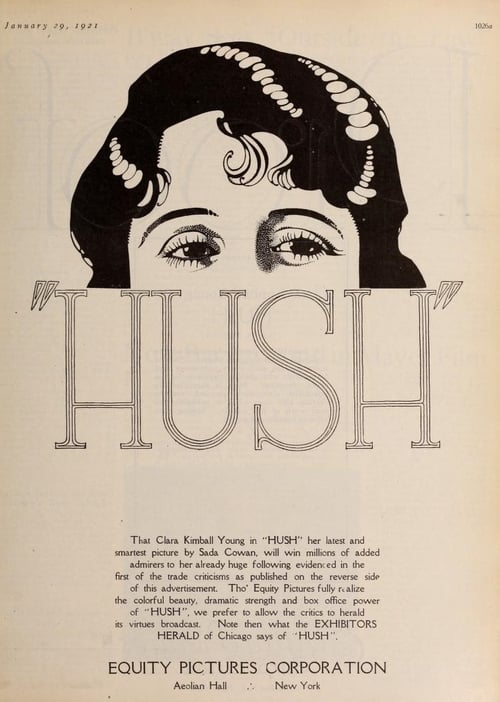
Hush
1921
No user ratings available yet
Representation score: 0.6 out of 10
Representation Score
Limited
1928
PassedDirector
Erle C. Kenton
Runtime
56 minutes
Average Rating
No ratings yetNew Showbiz Analysis
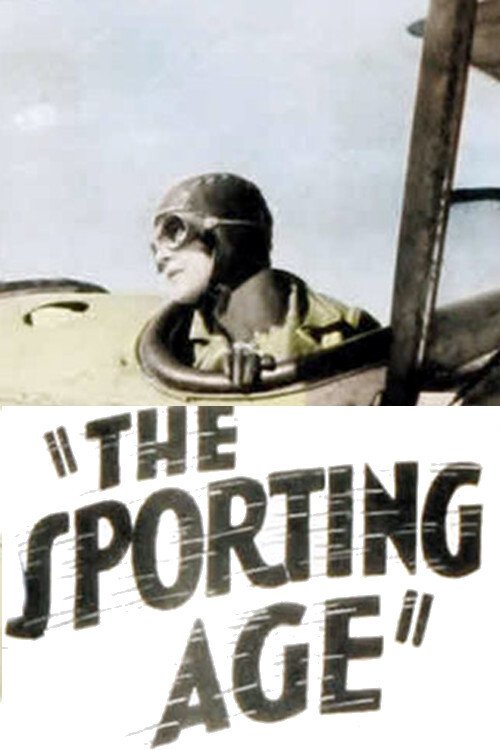
The Sporting Age is a conventional 1920s drama that emphasizes traditional romantic reconciliation over social disruption. The narrative structure reinforces the era's established domestic and patriarchal hierarchies. While the film includes a protagonist with a physical disability, the condition is used as a tool for manipulation rather than a meaningful exploration of impairment. Additionally, the social setting remains confined to a homogeneous, upper-class Western framework.
Category Breakdown
The story revolves around a traditional marital crisis involving infidelity. There are no indications of queer identity or non-straight relationships.
Female characters primarily serve as subjects within domestic plots. The resolution of the plot depends on a patriarchal scheme orchestrated by the male protagonist to manipulate romantic outcomes.
The film portrays a homogeneous, upper-class social circle. There is no evidence of non-white actors or diverse ethnic perspectives.
The narrative upholds traditional Western social values and the sanctity of the nuclear family. It affirms the existing socioeconomic order of high-society leisure.
The protagonist's blindness mainly serves as a plot device for deception. The film does not delve into the lived experience or systemic challenges faced by visually impaired individuals.
Present on Screen
Limited or Absent
Official Synopsis
Blinded in a train accident James Driscoll (Holmes Herbert), whose wife, Miriam Driscoll (Belle Bennett), has been having an affair with his young male secretary Phillip Kingston )Carroll Nye), regains his eyesight. He keeps this from his wife, who continues her affair. Finally, he invites his young niece Nancy Driscoll (Josephine Borio) in the hopes she will fall for Philip and vice-versa. His ploy works, James reveals he can see again, and husband and wife are reconciled.
1921
1935
1924
1931
1930

1935
1946
1929
No reviews yet. Be the first to share your thoughts on this movie!
Use the rating form above to leave a star rating and optional review.