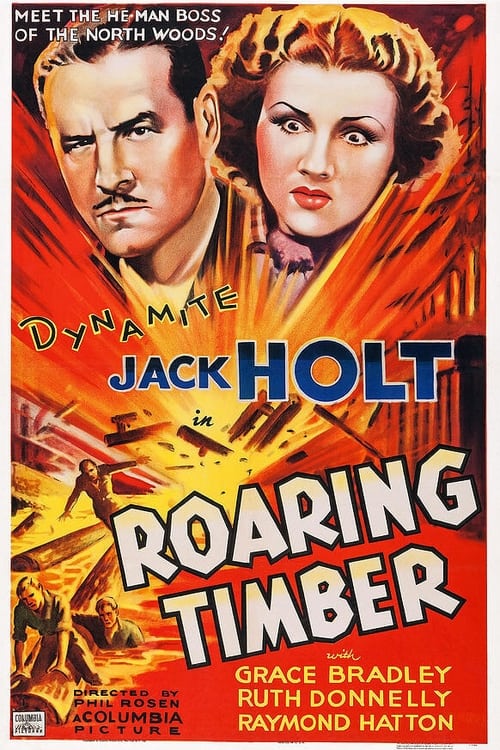
Roaring Timber
1937
No user ratings available yet
Representation score: 1.3 out of 10

Representation Score
Limited
1932
PassedDirector
Albert S. Rogell
Runtime
62 minutes
Average Rating
No ratings yetNew Showbiz Analysis
The film presents a conventional 1932 adventure-romance centered on a white, male-dominated logging camp. Professional authority and family succession are treated as natural and good, with no critique of these institutions. Ginger Rogers’ character, Honey, serves as the romantic prize who validates the male lead’s heroism. The story reinforces traditional hierarchies where male physical competence is the primary moral virtue. Representation is limited to the unmarked white, able-bodied, heterosexual norm of the period. The narrative offers no challenge to the gender, racial, or class structures of its era. The overall score reflects this lack of diversity across all categories.
Category Breakdown
The narrative follows a strictly heterosexual courtship between Buck and Honey. No same-sex intimacy, queer characters, or non-heteronormative dynamics appear in the cast or plot.
Honey drives the romantic arc and makes the final choice to stay with Buck, but her agency is framed as a reward for his physical heroism. Men hold all professional authority in the all-male logging camp.
The cast and setting are entirely white. No non-white characters appear in the logging camp, on the carnival boat, or in the supporting roles listed in the credits.
The film upholds the logging camp as a legitimate, honorable workplace and the father-son succession as a natural duty. Family loyalty and physical labor are treated as the primary moral virtues.
No characters have lasting impairments, visible differences, or fat bodies that function as a central theme. Physical injury occurs only as a temporary plot device to shift power dynamics.
Present on Screen
Limited or Absent
Official Synopsis
Buck is a hard working lumberjack, but likes to have fun. Buck's father is the foreman and wants Buck to take over when he retires. Buck is in love with Honey, a show-girl on the carnival boat, but she won't live in a lumberjack camp.
1937
1928

1932

1928
1926
1928
1922
1927
No reviews yet. Be the first to share your thoughts on this movie!
Use the rating form above to leave a star rating and optional review.