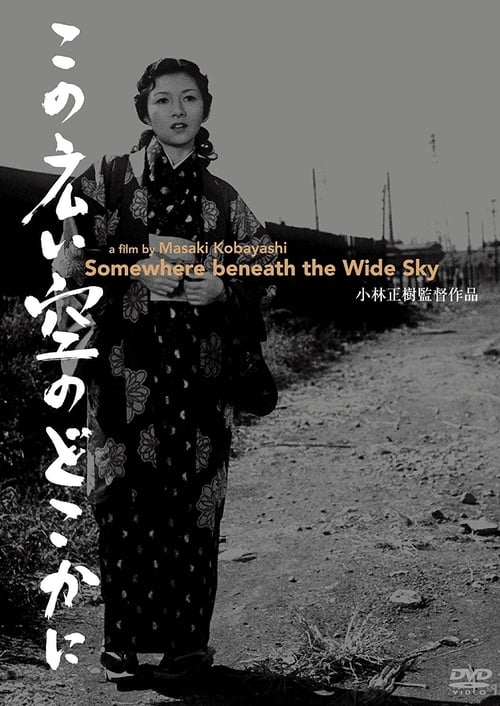
Somewhere Beneath the Wide Sky
1954
No user ratings available yet
Representation score: 5.7 out of 10

Representation Score
Fair
1962
Director
Kirio Urayama
Runtime
100 minutes
Average Rating
No ratings yetNew Showbiz Analysis
Foundry Town is a period piece deeply rooted in the socio-economic realities of 1960s Japan. Its main strength lies in its portrayal of a female protagonist challenging traditional gender norms within a rigid industrial setting. However, the film is limited by its homogeneous demographic focus. It lacks LGBTQ+ representation and racial diversity, reflecting the historical context rather than modern standards of diversity. Ultimately, the film succeeds as a social realist study of class and ambition, though it remains narrow in its cultural scope.
Category Breakdown
The film does not include any explicit LGBTQ+ characters or stories. It focuses on traditional family and industry structures typical of 1960s Japanese cinema.
A female protagonist pursues higher education, challenging traditional gender roles. This ambition disrupts the expected passivity of women in a male-dominated foundry environment.
The film reflects the homogeneous demographics of early 1960s Kawaguchi. It serves as a localized study of class rather than a multi-ethnic narrative.
The story examines the tension between traditional labor identities and modern individualistic goals. It provides a nuanced look at post-war Japanese industrialization and community expectations.
There is no evidence of characters with visible or invisible disabilities playing central roles in the narrative.
Present on Screen
Limited or Absent
Official Synopsis
Set in Kawaguchi in the early 60s, this simple story chronicles the lives of foundry families and one girl's dreams of higher education.
1954
1936
1947
1970
1963
1964
1962
1959
No reviews yet. Be the first to share your thoughts on this movie!
Use the rating form above to leave a star rating and optional review.