
A Film Like Any Other
1968
No user ratings available yet
Diversity score: 6.3 out of 10
1966
Director
Yoko Ono, Anthony Cox
Runtime
6 minutes
Average Rating
No ratings yetSynopsis
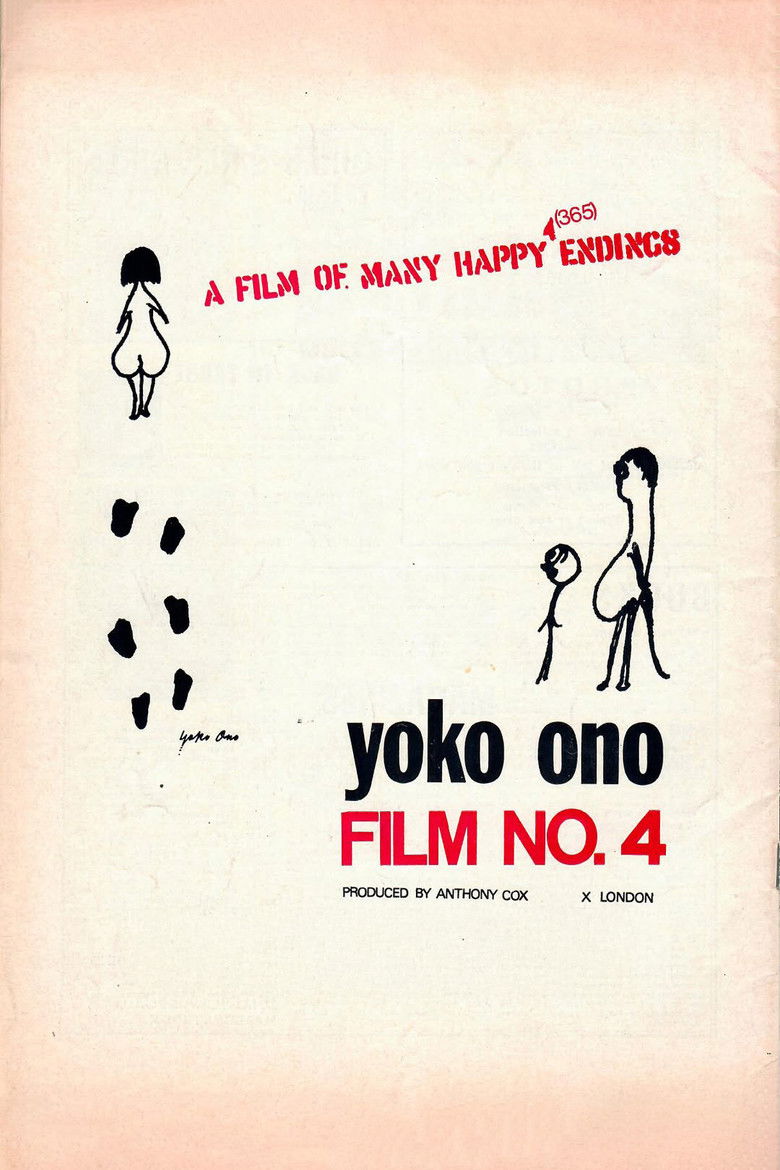
This film consists entirely of close ups of famous persons' bottoms. Ono meant it to encourage a dialogue for world peace.
Overall Score
Good
Category Breakdown
LGBTQ+ Representation
The film disrupts heteronormative visual standards by focusing on anatomy typically relegated to the periphery. This approach deconstructs the traditional male gaze, though the lack of explicit character identity limits deeper representation.
Gender Representation
By stripping away facial identity and social status, the film challenges traditional gender hierarchies. Reducing famous figures to anonymous anatomical focuses flattens the power dynamics often used to reinforce masculine or feminine authority.
Racial & Ethnic Diversity
The film utilizes a montage of various public figures to promote a dialogue for world peace. This conceptual approach suggests an attempt to transcend specific racial or ethnic boundaries through universal visual language.
Religious & Cultural Diversity
The work demonstrates high cultural subversion by prioritizing conceptual meaning over Western narrative structures. Its anti-institutional critique and globalist peace message reject nationalist or strictly traditionalist frameworks.
Disability Representation
There is no evidence within the film to allow for a meaningful assessment of physical or neurodivergent disability representation.
Strengths
Areas for Improvement
AI Analysis
No. 4 is a radical piece of conceptual filmmaking that uses the human body to dismantle social hierarchies. By focusing on the anatomy of famous figures, Yoko Ono subverts the traditional celebrity gaze and challenges established power structures. The film's strength lies in its ability to use a non-linear, avant-garde style to promote a message of global peace. It moves away from conventional visual consumption toward a more egalitarian, albeit unconventional, perspective. However, the work lacks traditional character-driven agency. Because the subjects are reduced to anonymous anatomical parts, the film cannot provide specific details regarding individual identities, sexual orientations, or specific demographic breakdowns.
1968

1986
1961

2012

1964
2006

1997

2011
1967
2019

1932

1998
No reviews yet. Be the first to share your thoughts on this movie!
Use the rating form above to leave a star rating and optional review.