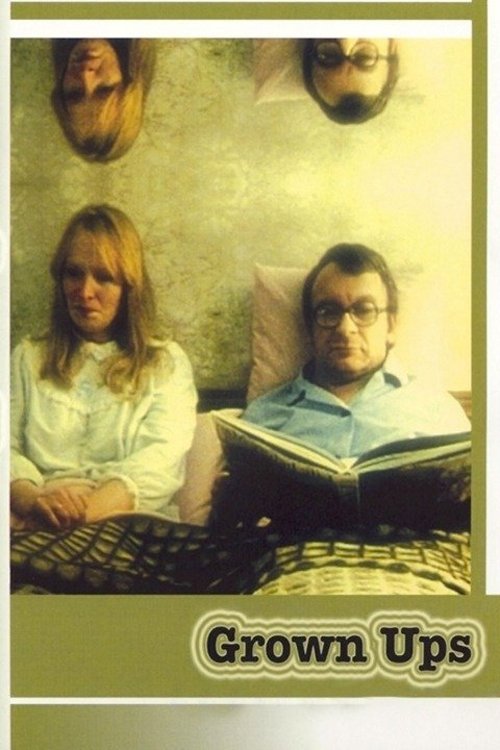
Grown-Ups
1980
No user ratings available yet
Representation score: 5.6 out of 10
Representation Score
Fair
1979
Director
Mike Leigh
Runtime
73 minutes
Average Rating
No ratings yetNew Showbiz Analysis
Mike Leigh’s work serves as a sociological study of class and social performance rather than a showcase of demographic diversity. The film excels at examining the friction between different social strata and the performative nature of status. However, the narrative is limited by its homogeneity. The focus on the British peerage and brokerage culture results in a significant lack of racial, ethnic, and LGBTQ+ representation. Ultimately, the film’s progressive value lies in its critique of traditional authority and class hierarchies rather than its inclusion of diverse identities.
Category Breakdown
The film does not include any explicit representations of LGBTQ+ identities or same-sex relationships. The story focuses on the social interactions of brokerage employees and the aristocracy, without providing any clear non-straight or non-cisgender representation.
Women navigate social expectations through various archetypes, from the timid Caroline to the provocative Samantha. April’s domestic life contrasts with the male-dominated professional world, but traditional power structures persist.
The setting emphasizes a highly homogeneous, Anglo-centric social hierarchy. There is no indication of racial or ethnic diversity among the cast or described social circles.
The story critiques Western institutions by highlighting the instability of the aristocracy. It deconstructs the idea of the upper class through the lens of flattery and financial struggles.
There are no visible or mentioned depictions of physical or neurodivergent disabilities within the provided narrative details.
Present on Screen
Limited or Absent
Official Synopsis
Slice-of-life look at class divisions among employees of a brokerage house. Alan, with his portrait of the Queen and love of the peerage; his wife April, who raises cats; youthful and pretentious friends Nigel, Giles, and Anthony, who gather for a wine-soaked dinner party with the chatty and risque Samantha and the mousy Caroline; the plummy Lord and Lady Crouchurst, in a spot of bother needing the help of Francis, a senior partner, to assist with the family's cash flow. Alan comes home from work to find Mr. Shakespeare doing a photo shoot of one of April's cats and a wealthy stranger, Miss Hunt, waiting to purchase one. His instincts for sycophantic palaver kick in.
1980
1983
1975
1989
1973

1991
1977
1963
No reviews yet. Be the first to share your thoughts on this movie!
Use the rating form above to leave a star rating and optional review.