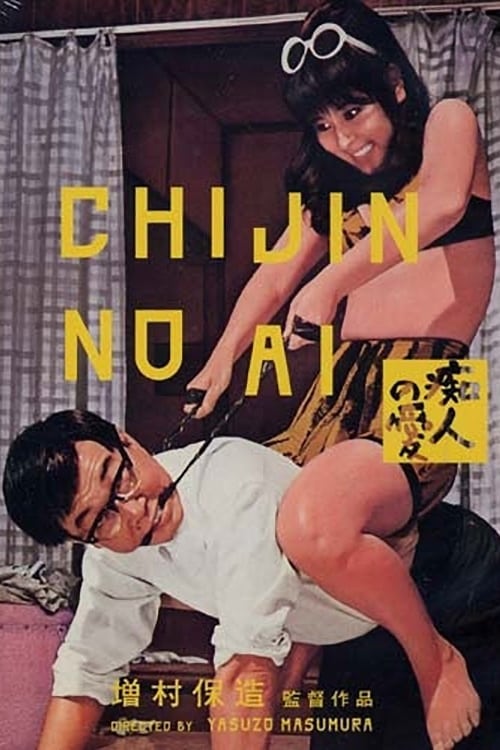
Love for an Idiot
1967
No user ratings available yet
Representation score: 6.0 out of 10
Representation Score
Fair
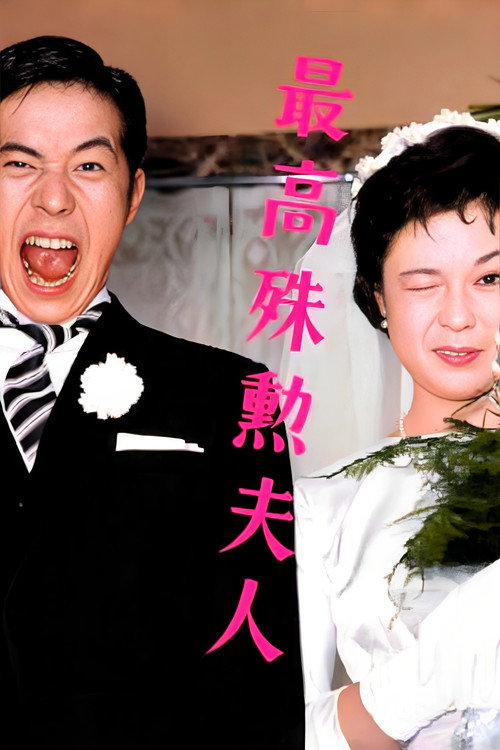
1959
Director
Yasuzō Masumura
Runtime
95 minutes
Average Rating
No ratings yetNew Showbiz Analysis
Masumura’s film succeeds by emphasizing female autonomy and challenging established gender hierarchies. Kyoko’s refusal to be used for corporate-familial mergers offers a sophisticated critique of mid-century social constraints. However, the film remains limited by its era's cultural homogeneity. It lacks LGBTQ+ representation and racial diversity, focusing instead on the internal social stratification of a specific Japanese context. Ultimately, the work is a meaningful exploration of individualistic drives against traditional domestic norms.
Category Breakdown
The film centers on traditional marriages within the Nonomiya and Mihara families and does not include any queer identities or themes related to non-straight relationships.
Kyoko asserts her independence by actively resisting the arranged marriage system, shifting the narrative focus from women as objects to women as individuals with their own choices.
The cast is culturally uniform, reflecting the Japanese studio system of 1959. While it lacks diverse racial backgrounds, it serves as a specific cultural document of its time.
The story challenges traditional family piety by depicting marriage negotiations as coercive. Kyoko's rebellion highlights a preference for personal morality over strict adherence to ancestral duties.
There is no mention of characters with visible or invisible disabilities. No information is provided about neurodivergence or physical impairments within the character arcs.
Present on Screen
Limited or Absent
Official Synopsis
Kyoko is the third daughter of the Nonomiya family, a very ordinary family. Momoko, the eldest daughter, is married to Ichiro, the president of Mihara Shoji, and Riko, the second daughter, is married to Jiro, the managing director, and they plot to marry Kyoko to Saburo, the third son of the Mihara family. Kyoko is angry at the marriage talk that is being pushed forward without her permission, and declares that she "definitely won't get married," but before she knows it, she begins to become aware of the other person...
1967
1958
1949

1960
1955
1961
1979

2005
No reviews yet. Be the first to share your thoughts on this movie!
Use the rating form above to leave a star rating and optional review.