Study No. 6
1930
No user ratings available yet
Representation score: 6.9 out of 10
Representation Score
Fair
1937
Director
Mary Ellen Bute, Ted Nemeth
Runtime
4 minutes
Average Rating
No ratings yetNew Showbiz Analysis
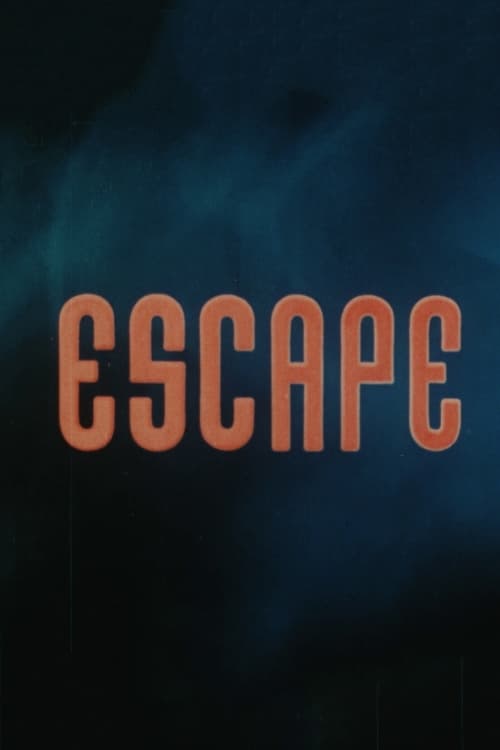
Escape (Synchronomy No. 4) serves as a formalist experiment that steers clear of traditional social representation. It avoids character-driven narratives by focusing on geometric abstraction and rhythm. The film's significance lies in its departure from the narrative and structural norms of the 1930s. Through the dissolution of a black grid, it disrupts conventional cinematic expectations. While the film lacks diverse character representation, its avant-garde nature and leadership by a female pioneer mark a departure from the era's standard cinematic hierarchies.
Category Breakdown
Since the film is an abstract animation without human characters or dialogue, it does not depict any explicit LGBTQ+ identities.
The content focuses on color and rhythm, making it gender-neutral. Notably, Mary Ellen Bute’s role as a female director in a male-dominated era highlights her professional achievement.
Using warm-toned triangles and color theory instead of human characters, the film avoids racial stereotypes prevalent in 1937 mainstream animation.
By incorporating Bach's music in an experimental context, the film emphasizes a secular, aesthetic experience focused on sensory enjoyment rather than traditional moral or religious instruction.
No characters are depicted with disabilities. The focus on visual pulsation provides a sensory experience that does not address social or physical realities related to disabilities.
Present on Screen
Limited or Absent
Official Synopsis
To the toccata portion of Bach's "Toccata and fugue in D minor," we watch a play of sorts. Blue smoke forms a background; a grid of black lines is the foreground. Behind the lines, a triangle appears, then patterns of multiple triangles. Their movements reflect the music's rhythm. Behind the barrier of the black lines, the triangle moves, jumps, and takes on multiple shapes. In contrast with the blue and the black, the triangles are warm: orange, red, yellow. The black lines bend, swirl into a vortex, then disappear. The triangle pulsates and a set of many of them rises.
1930
1936
1935
1921
1940
1936
1937
1938
No reviews yet. Be the first to share your thoughts on this movie!
Use the rating form above to leave a star rating and optional review.