Hoppity Pop
1946
No user ratings available yet
Representation score: 0.0 out of 10
Representation Score
Minimal
1938
Not RatedDirector
Oskar Fischinger
Runtime
7 minutes
Average Rating
No ratings yetNew Showbiz Analysis
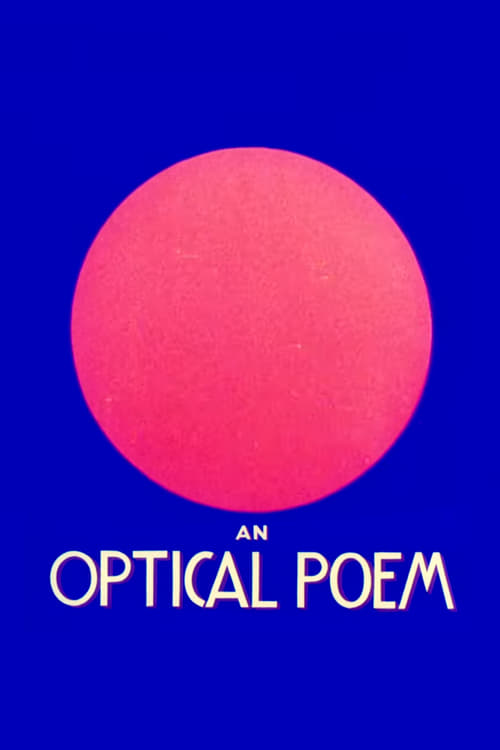
Oskar Fischinger’s *An Optical Poem* is a foundational work of avant-garde cinema that operates entirely outside the parameters of social representation. By prioritizing sensory abstraction over traditional narrative, the film avoids the use of characters, dialogue, or interpersonal dynamics. Since the work is a non-representational experiment in 'visual music,' it lacks the human subjects necessary to address identity, ability to act, or socio-political vectors. The film's significance lies in its rhythmic and formalist architecture rather than its engagement with human diversity. Ultimately, the film remains neutral regarding the overlapping aspects of identity typically analyzed in cinema. It replaces storytelling focused on humans with a dance of two-dimensional shapes, such as circles and rectangles, synchronized to Liszt's 'Second Hungarian Rhapsody.'
Category Breakdown
The film is a non-narrative, abstract animation made up of geometric shapes. Since there are no human characters or dialogue, there is no depiction of sexual orientation or gender identity.
The story structure is completely free of gendered characters. By removing the human element entirely through pure abstraction, the film bypasses traditional gender hierarchies.
The film uses colors and geometric shapes to interpret musical themes. There are no racial or ethnic identities present in this formalist framework.
The film serves as a technical experiment in synesthesia rather than a cultural critique. It uses Liszt's music as a structural foundation for rhythm rather than a cultural celebration.
There are no characters depicted with physical, sensory, or neurodivergent traits. The focus remains strictly on the synchronization of auditory and visual stimuli.
Present on Screen
Limited or Absent
Official Synopsis
A dance of shapes. A title card tells us this is an experiment in conveying the mental images of music in a visual form. Liszt's "Second Hungarian Rhapsody" is the music. The shapes, all two-dimensional, are circles primarily, with some squares and rectangles, and a few triangles. The shapes move rhythmically to the music: receding from view or moving across the screen. Red circles on a blue background; light blue squares; white rectangles. Then, a red background of many circles with a few in the foreground. Red gives way to blue then to white. Shapes reappear as Liszt's themes re-occur. Then, with a few staccato notes and images, it's over.
1946
1952
1969
1962
1959
1940
1955
1949
No reviews yet. Be the first to share your thoughts on this movie!
Use the rating form above to leave a star rating and optional review.