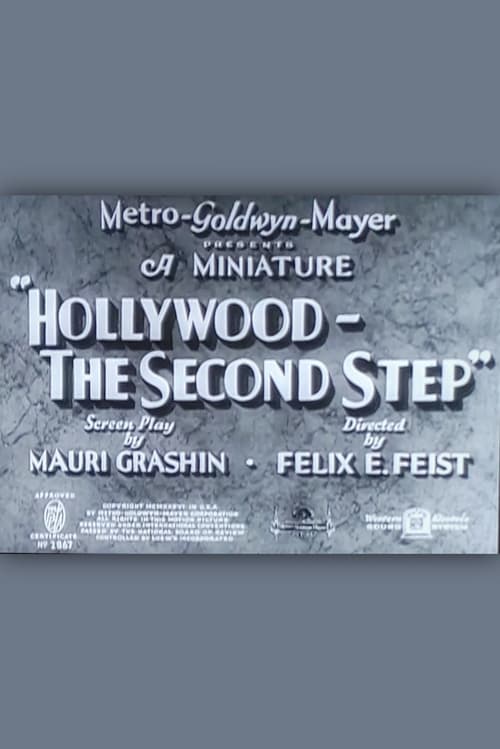
Hollywood - The Second Step
1936
No user ratings available yet
Diversity score: 1.6 out of 10
1940
ApprovedDirector
Oliver Garver
Runtime
11 minutes
Average Rating
No ratings yetSynopsis
This short promotes the premise that movies often create a demand for the fashions seen in them. It starts with a vignette in rural America. A mother and daughter go to town to buy a new dress. In the dress shop window is a designer dress worn by Joan Crawford in a recent movie. We then go to Hollywood and visit Adrian, MGM's chief of costume design, and see how multiple copies of a single clothing pattern are produced. The film ends with short segments of several MGM features.
Overall Score
Minimal
Category Breakdown
LGBTQ+ Representation
The film focuses entirely on consumerism and fashion trends. It offers no visible representation of non-cisnormative identities or narratives addressing heteronormativity.
Gender Representation
The narrative centers on a mother-daughter vignette and the aesthetic consumption of fashion. While it highlights the professional agency of MGM's chief designer, Adrian, it primarily reinforces traditional feminine archetypes.
Racial & Ethnic Diversity
The scope is limited to rural America and MGM's industrial processes. There is no indication of a diverse cast, reflecting a homogeneous depiction of American consumerism.
Religious & Cultural Diversity
This documentary celebrates capitalist structures and the influence of the Hollywood studio system. It promotes the aspirational power of Western consumer culture without offering any systemic critique.
Disability Representation
There is no information regarding the portrayal of physical or neurodivergent identities. No evidence of disability-centric narratives is present in the film.
Strengths
Areas for Improvement
AI Analysis
This 1940 documentary functions as a promotional vehicle for the MGM studio system rather than a medium for social critique. It prioritizes the glamour of Hollywood and the economic reach of the fashion industry, reinforcing the mid-century American industrial model. The film's narrative architecture relies on traditional social hierarchies. By focusing on domestic vignettes and the visual consumption of female stars, it adheres strictly to the era's conventional cultural norms and lacks intersectional depth. Ultimately, the work serves to celebrate capitalist ideals and the prestige of the studio system. It offers minimal representation of marginalized identities, presenting a homogeneous view of American life and consumer aspiration.
1936

1961

1922
1935
1999
1941
1951
1935
1963

1987
1937

1965
No reviews yet. Be the first to share your thoughts on this movie!
Use the rating form above to leave a star rating and optional review.