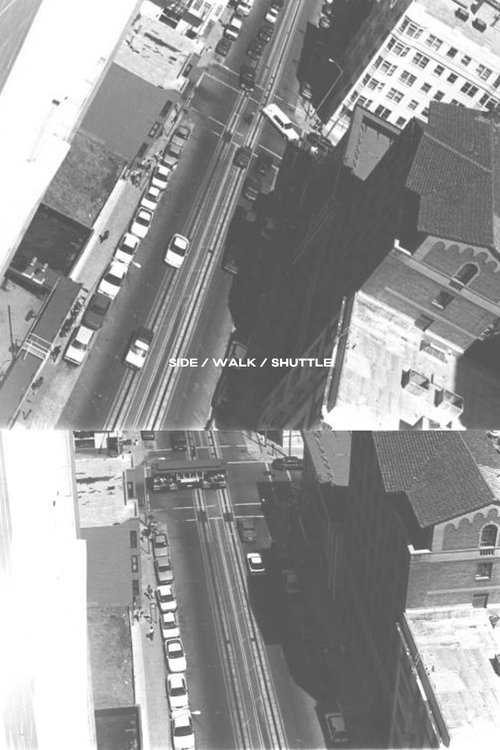
Side/Walk/Shuttle
1992
No user ratings available yet
Representation score: 0.1 out of 10
Representation Score
Minimal
1974
Director
Ernie Gehr
Runtime
38 minutes
Average Rating
No ratings yetNew Showbiz Analysis
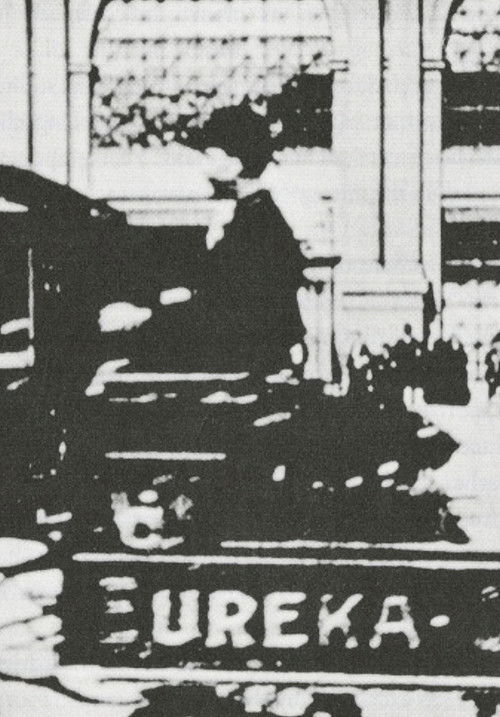
Ernie Gehr’s *Eureka* is a structuralist experiment that prioritizes the physical properties of film over traditional storytelling. By focusing on the mechanics of the camera and the chemical dance of film grain, the film operates as a meditation on technology and historical memory. It avoids the character-driven frameworks typically used for social narratives. Because the work is an analytical deconstruction of the cinematic apparatus, it steers clear of social identity markers such as gender, race, or sexuality. Instead, it aims to disrupt the illusion of reality, focusing on the medium itself rather than specific human identities.
Category Breakdown
The film focuses on the texture and historical footage of Market Street. It includes no LGBTQ+ characters or romantic pairings.
As a structural documentary, the work centers on the physical properties of film. It lacks depictions of gendered roles or interpersonal dynamics.
The film emphasizes the medium's texture and historical footage of Market Street. It does not include diverse casts or subversions of racial stereotypes.
The film presents an intellectual secularism by focusing on the physical reality of the medium. It deconstructs the authority of the historical image.
The subject matter is purely formal and historical. It does not feature characters or narrative arcs involving physical or neurodivergent identities.
Present on Screen
Limited or Absent
Official Synopsis
"This is a film that not only documents a place in time, but a modern spatial vision, a look and technology that makes this street the sort of place it is. And here in this preserved piece of history, one also sees the chemical dance of film grain that makes up the material of Gehr’s own History. We do not simply see Market Street circa 1902, but a film of Market Street, and it is as fascinating as the site itself. Film may in some sense exist indifferent to emotions, objects, beings, or ideas. But early in his work Gehr realized that film, even conceived as a thing in itself, can never exist outside of history. The very dance of grain on the screen acquires a history of its production, its screenings, its viewings. History is the place no place can avoid.” - Tom Gunning
1992

1929
1964

1927

2012
1955

1966
1965
No reviews yet. Be the first to share your thoughts on this movie!
Use the rating form above to leave a star rating and optional review.