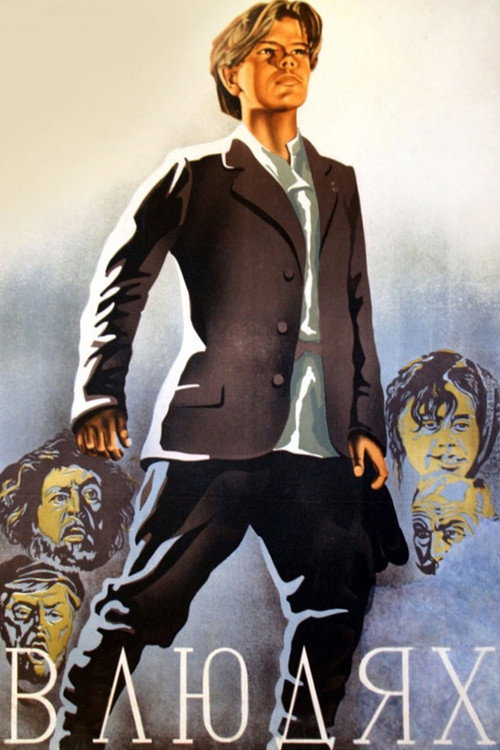
My Apprenticeship
1939
No user ratings available yet
Diversity score: 4.3 out of 10

1938
Director
Mark Donskoy
Runtime
100 minutes
Average Rating
No ratings yetSynopsis
Young Maxim grows up under the czarist regime with his grandparents as guardians. Continually demeaned by his martinet grandfather, Maxim is drawn to his warm-hearted grandmother, who instills in him the willingness to pursue his writing muse.
Overall Score
Fair
Category Breakdown
LGBTQ+ Representation
The film contains no visible representation of LGBTQ+ identities or non-heteronormative expressions. The narrative focuses strictly on socioeconomic and familial struggles within a traditional domestic framework.
Gender Representation
The film depicts a violent patriarchal structure led by an oppressive grandfather. While the grandmother provides a vital emotional and intellectual counter-narrative, female characters remain largely defined by the domestic sphere.
Racial & Ethnic Diversity
Set in provincial Russia, the film reflects the demographic homogeneity of the era. The narrative focuses almost exclusively on the class-based identity of the Russian proletariat rather than ethnic plurality.
Religious & Cultural Diversity
The story offers a profound critique of czarist and capitalist institutions. It frames the pre-revolutionary social order as exploitative, using the protagonist's journey to champion an anti-capitalist perspective.
Disability Representation
There is no explicit focus on specific disabilities. However, the film portrays the psychological and physical toll of malnutrition and trauma caused by systemic poverty and neglect.
Strengths
Areas for Improvement
AI Analysis
Mark Donskoy’s film prioritizes class-based identity over modern intersectional categories. It succeeds as a systemic critique of historical hierarchies, using the domestic sphere to illustrate the oppression of the proletariat. While the film lacks racial and LGBTQ+ diversity, it achieves high marks for its cultural deconstruction of czarist institutions. It replaces traditional heroic childhood tropes with a gritty, socio-political reality. Ultimately, the work functions as a piece of historical revisionism, focusing on the necessity of social transformation through the lens of class consciousness.
1939
1956
1972

1946
1973
1946
1987
1943
1941
1955
1931
1958
No reviews yet. Be the first to share your thoughts on this movie!
Use the rating form above to leave a star rating and optional review.