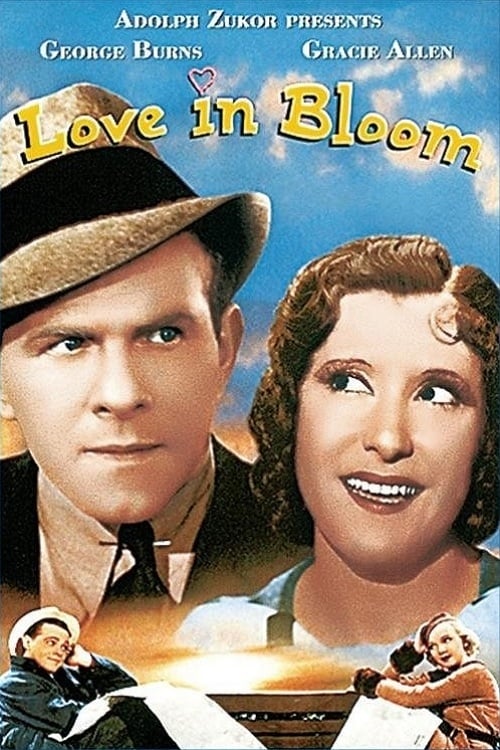
Love in Bloom
1935
No user ratings available yet
Diversity score: 2.8 out of 10

1934
Not RatedDirector
Marc Allégret
Runtime
92 minutes
Average Rating
No ratings yetSynopsis
Aspiring stage actress Zou Zou tries to help her childhood friend prove his innocence after he's accused of murder.
Overall Score
Limited
Category Breakdown
LGBTQ+ Representation
The film offers no evidence of non-cisnormative identities. The romance genre and 1934 production period suggest a narrative that adheres to conventional heteronormative structures.
Gender Representation
Zouzou serves as a central protagonist with the agency to drive the plot. However, the film lacks a systemic subversion of masculine authority or gender hierarchies.
Racial & Ethnic Diversity
The production appears to reflect the homogeneous social landscape of mid-1930s French cinema. There is no indication of a diverse or non-Anglo-Saxon majority cast.
Religious & Cultural Diversity
The story relies on traditional narrative morality centered on a murder mystery. It lacks themes that challenge established social, secularist, or religious institutions.
Disability Representation
There is no information available regarding the portrayal of physical or neurodivergent disabilities within the film.
Strengths
Areas for Improvement
AI Analysis
Zouzou is a traditional musical comedy-romance that follows a classic trope of a protagonist resolving a legal crisis. While the lead character possesses individual agency, the film operates within the social constraints of 1934 French cinema. The narrative lacks intersectional complexity or the intentional subversion of social norms. It functions as a conventional period piece rather than a work that deconstructs systemic power dynamics. Ultimately, the film reflects the homogeneous and traditional social structures of its era, offering little in the way of progressive representation or identity-based critique.
1935
1936

1930

1935

1937

1941

1941

1932

1935
1933
1943
1933
No reviews yet. Be the first to share your thoughts on this movie!
Use the rating form above to leave a star rating and optional review.