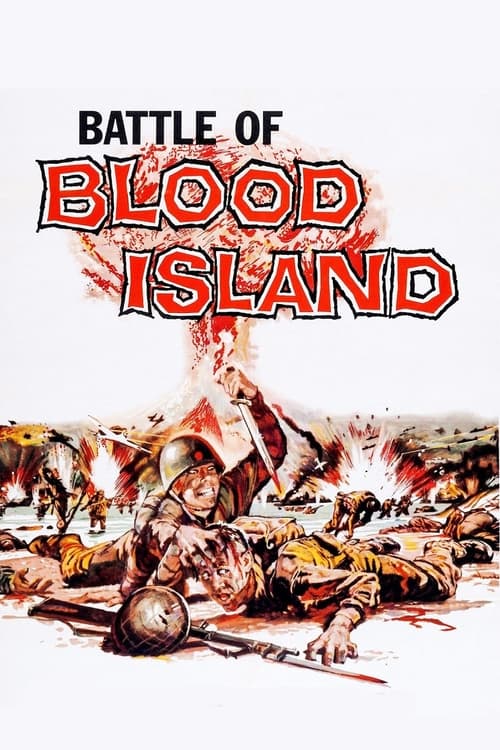
Battle of Blood Island
1960
No user ratings available yet
Diversity score: 2.9 out of 10

1961
NRDirector
Herbert Coleman
Runtime
83 minutes
Average Rating
No ratings yetSynopsis
This is only the second Audie Murphy movie set in WWII after his autobiographical "To Hell and Back." Here Murphy steps out of his usual kid-Western role to play a civilian working for the Navy helping supply guerilla insurgents in the Philippines. His sole motive is not politics nor bravery, but to find his bride from whom he was separated during the Japanese invasion two years before
Overall Score
Limited
Category Breakdown
LGBTQ+ Representation
The film centers on a singular, heteronormative romantic pursuit. There is no evidence of queer subtext or non-cisnormative identities within the narrative.
Gender Representation
The story follows a traditional gender hierarchy where the male protagonist acts as the primary driver. The female lead serves as a catalyst for the plot rather than an autonomous character.
Racial & Ethnic Diversity
While the Philippine setting includes non-Western characters, agency remains centered on the American lead. The roles appear to function as secondary support to the Western protagonist.
Religious & Cultural Diversity
The narrative aligns with mid-century Western wartime values and geopolitical perspectives. It focuses on individualistic motives and personal devotion rather than systemic critique.
Disability Representation
There is no discernible focus on visible or invisible disabilities within the available synopsis.
Strengths
Areas for Improvement
AI Analysis
Battle at Bloody Beach is a conventional mid-century war drama that adheres to the established social hierarchies of 1961. The narrative is driven by a singular male protagonist, Audie Murphy, whose personal quest to find his bride dictates the film's momentum. The film relies on traditional archetypes, positioning women as figures to be rescued and non-Western characters as secondary to the American experience. This reinforces a colonial-era narrative structure common to the studio system of the era. Ultimately, the film offers little disruption to the gendered or racial expectations of its time, functioning as a standard genre piece centered on masculine agency and traditional duty.
1960
1957
1955
1959
1954
1962
1949
1939
1950

1946
1967
1956
No reviews yet. Be the first to share your thoughts on this movie!
Use the rating form above to leave a star rating and optional review.