The Young Warriors
1967
No user ratings available yet
Representation score: 1.1 out of 10
Representation Score
Limited
1956
NRDirector
Charles F. Haas
Runtime
79 minutes
Average Rating
No ratings yetNew Showbiz Analysis
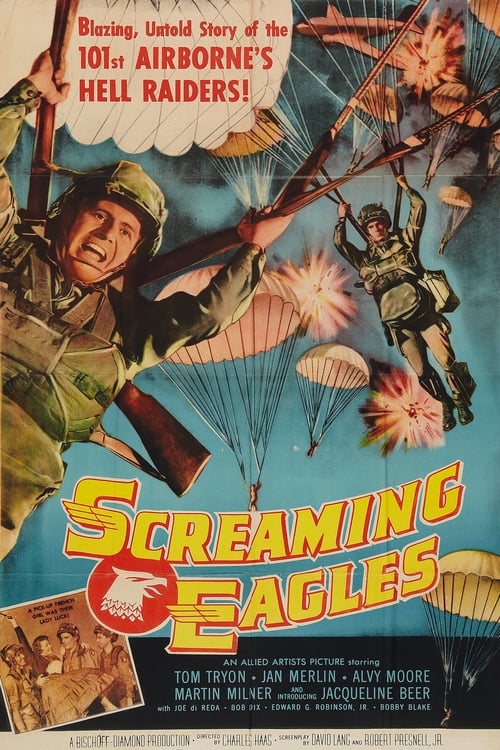
Screaming Eagles is a product of its time, adhering to the conventional dramatic structures of mid-century studio filmmaking. The film upholds traditional social hierarchies and reinforces standard Western cultural norms without questioning them. The narrative heavily focuses on masculine military archetypes, leaving little room for diverse gender expressions or non-traditional identities. It presents a homogeneous view of the military experience that lacks significant racial, cultural, or disability-based representation.
Category Breakdown
The film does not include any openly LGBTQ+ characters or same-sex relationships. It follows the traditional assumptions that everyone is straight and cisgender, which was common in 1950s war dramas.
The story centers around masculine military figures and their experiences as paratroopers. Women are shown in traditional supportive roles, reinforcing gender hierarchies without challenging them.
The film likely portrays Western military forces through an Anglo-Saxon lens, suggesting a lack of diverse ethnic representation within the military unit.
The story emphasizes traditional Western values such as patriotism and duty, validating the military mission and reinforcing established social norms.
Physical injuries are used primarily as a plot device to increase tension. There is no detailed exploration of neurodivergence or chronic illness beyond typical cinematic clichés.
Present on Screen
Limited or Absent
Official Synopsis
A group of young soldiers parachute into France in preparation for D-Day.
1967
1962
2012
1949
1944

1942
1959
1946
No reviews yet. Be the first to share your thoughts on this movie!
Use the rating form above to leave a star rating and optional review.