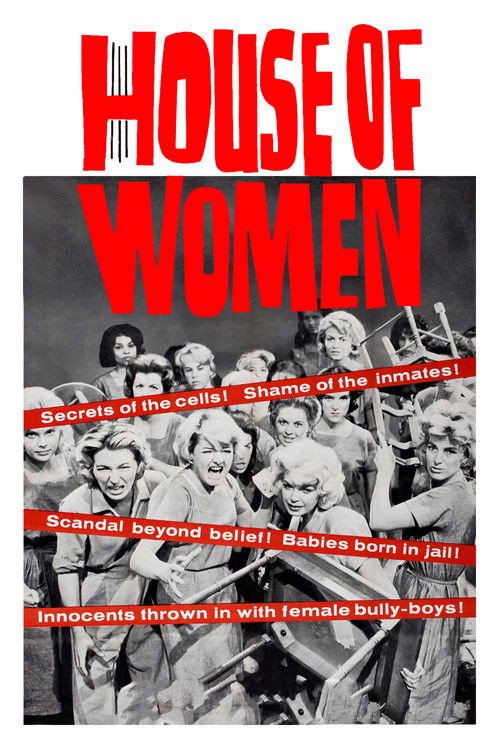
House of Women
1962
No user ratings available yet
Representation score: 2.2 out of 10
Representation Score
Limited
1955
Director
Edward L. Cahn
Runtime
70 minutes
Average Rating
No ratings yetNew Showbiz Analysis
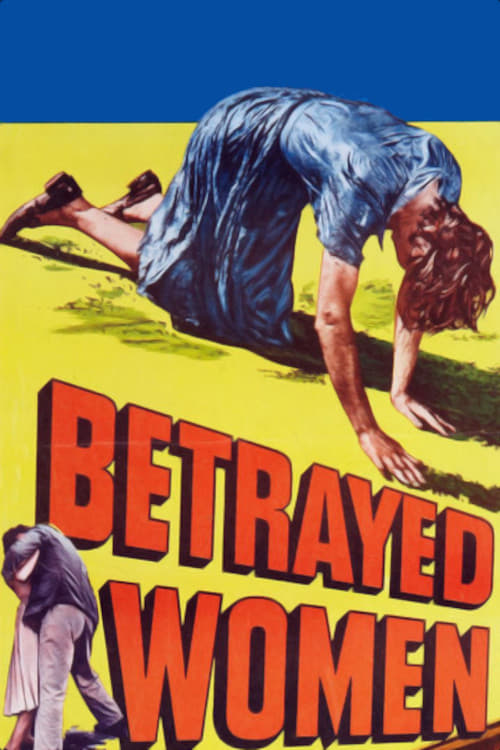
Betrayed Women offers a compelling challenge to mid-century gender norms by placing female criminals at the center of the action. By focusing on autonomous women rather than submissive domestic archetypes, the film provides a rare glimpse of female empowerment in 1950s noir. However, the film is limited by the systemic constraints of its era, lacking racial diversity and failing to represent LGBTQ+ identities. Its critique of institutional cruelty and traditional gender hierarchies is effective but constrained by the homogeneous casting and social conservatism prevalent in 1955 American cinema.
Category Breakdown
The film doesn't include any explicit LGBTQ+ characters or non-straight relationships. It follows traditional heterosexual storylines typical of 1950s crime dramas.
The story focuses on women who take control of their lives and survival, rather than being passive domestic figures. These women play a significant role in driving the narrative.
The film likely reflects the era's tendency toward homogeneous casting. There is no evidence of racial diversity or significant non-white representation within the narrative.
The film critiques institutional authority by presenting criminals as sympathetic figures. It suggests their actions are a response to systemic cruelty and a lack of love and support.
There is no evidence regarding the portrayal of physical or neurodivergent disabilities in this production.
Present on Screen
Limited or Absent
Official Synopsis
Love-starved gun molls (Carole Mathews, Beverly Michaels) escape from a prison farm where matrons make their lives miserable.
1962
1972
1950
1958
1988
1943
1953
1973
No reviews yet. Be the first to share your thoughts on this movie!
Use the rating form above to leave a star rating and optional review.