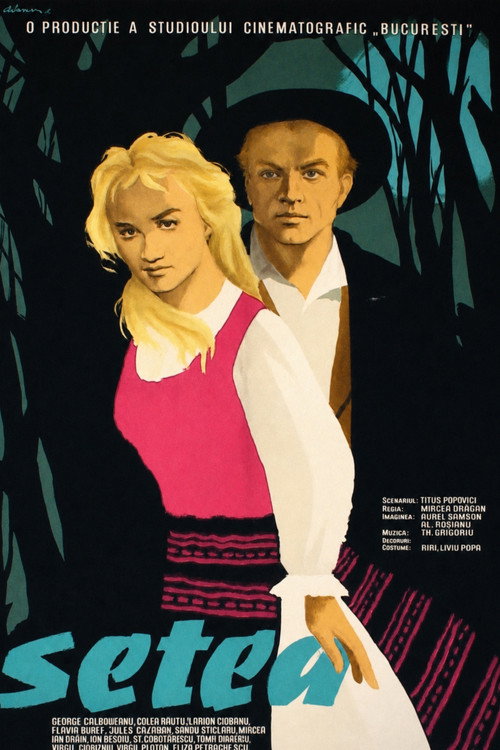
The Thirst
1960
No user ratings available yet
Representation score: 3.9 out of 10
Representation Score
Fair
1974
Director
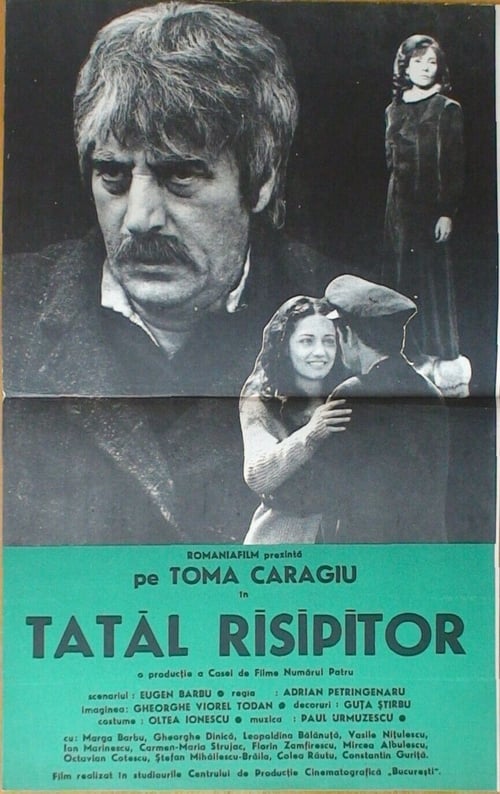
Adrian Petringenaru
Runtime
86 minutes
Average Rating
No ratings yetNew Showbiz Analysis
The Prodigal Father is a localized drama deeply rooted in the socio-political landscape of 1945 Romania. Its focus on agricultural reform and class dynamics emphasizes national transition and state-sanctioned themes over individual identity exploration. Since the narrative centers on rural, mid-century social shifts, it lacks diversity in terms of LGBTQ+ identities, racial variety, and disability representation. The film reflects the demographic and institutional realities of its time and place. While the film offers a detailed view of historical agrarian reforms and socio-political shifts, it does not provide a pluralistic perspective on identity, resulting in a low overall diversity score.
Category Breakdown
The film does not include any non-binary gender identities or same-sex relationships. The plot focuses on agricultural reforms and traditional social structures.
The story examines changes in gender roles and labor during the 1945 reforms. However, it likely upholds traditional patriarchal structures typical of mid-century rural life.
The cast and setting seem ethnically uniform, reflecting the demographics of 1940s Romania. There is no indication of diverse ethnic groups or actors from different backgrounds.
The film centers on the restructuring of rural society and land redistribution. It adheres to a specific socio-political framework without a pluralistic or secular critique.
There is no evidence of characters with physical or neurodivergent disabilities. The film does not show any representation or character development related to disability.
Present on Screen
Limited or Absent
Official Synopsis
This film is about the changes in the countryside happening in Romania around 1945, when am agrarian reform happens.
1960
1978
1976
1930

1973

1951

1959

1980
No reviews yet. Be the first to share your thoughts on this movie!
Use the rating form above to leave a star rating and optional review.