Dreams of Love
1970
No user ratings available yet
Representation score: 2.9 out of 10
Representation Score
Limited
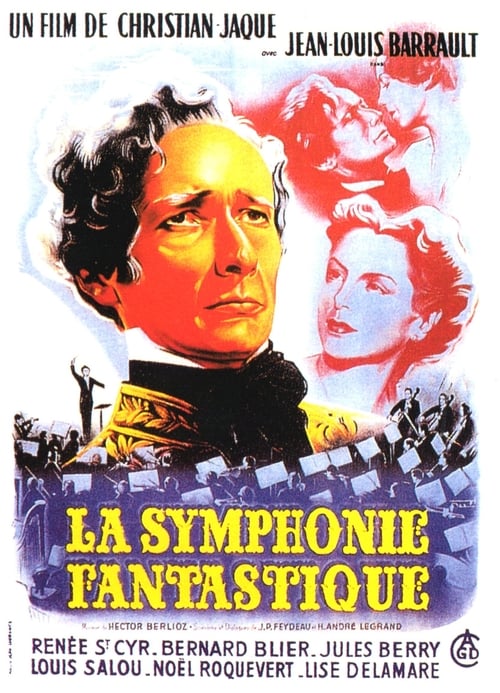
1942
Director
Christian-Jaque
Runtime
95 minutes
Average Rating
No ratings yetNew Showbiz Analysis
This biographical drama functions as an intimate character study of Hector Berlioz, prioritizing his psychological and creative struggles over broad social representation. The film captures the era's demographic realities, resulting in a lack of racial and LGBTQ+ diversity. While the narrative is limited by traditional gender hierarchies, it succeeds in humanizing the protagonist through his physical and mental health challenges. It moves beyond mere caricature to explore how illness and instability shape a creative life. Ultimately, the film is a period-specific portrait that explores individual ability to act against societal expectations, though it remains tethered to the conventional social structures of the 19th century.
Category Breakdown
The film focuses on Hector Berlioz's heterosexual relationships and his marriage, with no queer subtext present.
Female characters primarily serve as catalysts for the male protagonist's emotional growth. While his mother provides a moment of authority, women largely lack the independence to drive the plot.
Reflecting the demographic homogeneity of 19th-century France, the cast and setting are predominantly European with no evidence of diverse ethnic groups.
The narrative deconstructs the idea of a stable citizen by focusing on a protagonist defined by artistic obsession and social detachment. It explores subjective morality through the 'tortured artist' archetype.
The film offers a nuanced portrayal of physical and mental health. Berlioz's struggle with a throat abscess and his psychological instability are framed as complex components of his artistic identity.
Present on Screen
Limited or Absent
Official Synopsis
The film is biographical, telling the story of the life and artistic struggles of the French composer Hector Berlioz. Berlioz is shown as a recalcitrant medical student in an anatomy class dreaming of becoming a composer; at a demonstration during a performance at the Paris Opéra conducted by Habeneck; at supper with other young artists (Hugo, Janin, Dumas, Mérimée, Delacroix); and chasing after his future wife Harriet Smithson, after a performance of Hamlet. Also depicted are his life in a garret, while suffering from an illness due to an abscess in the throat; a visit from his mother who curses him; and the composition of the Symphonie fantastique. The film then shows his marital breakdown, the premiere of his opera Benvenuto Cellini, his travels throughout Europe, his second marriage to Marie Recio (called "Marie Martin" in the film), public acceptance in old age and reconciliation with his son.
1970
2014
1913

1969
2022
1994
1980
2024
No reviews yet. Be the first to share your thoughts on this movie!
Use the rating form above to leave a star rating and optional review.