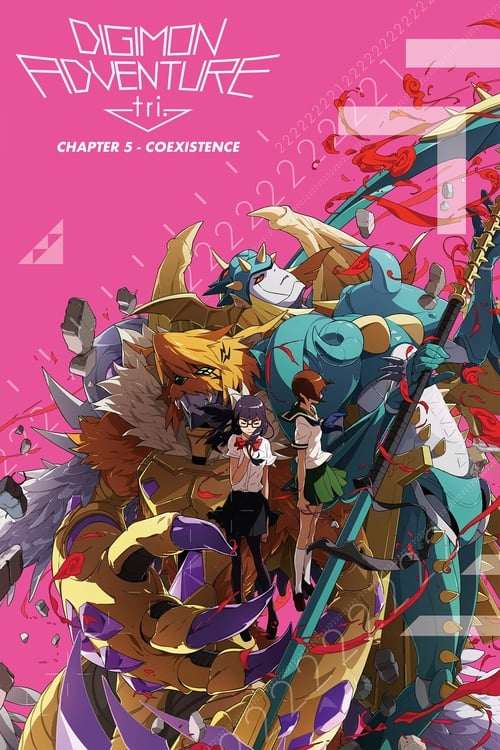
Digimon Adventure tri. Part 5: Coexistence
2017
No user ratings available yet
Representation score: 6.1 out of 10

Representation Score
Good
2016
Not RatedDirector
Keitaro Motonaga
Runtime
91 minutes
Average Rating
No ratings yetNew Showbiz Analysis
Digimon Adventure tri. Part 3: Confession prioritizes psychological depth and the subversion of genre clichés over demographic variety. It succeeds in presenting a more mature, melancholic realism compared to traditional heroic archetypes. The film's strength lies in its gender dynamics, where female characters act as intellectual and emotional leaders. However, the narrative remains limited by a homogeneous cast and a lack of LGBTQ+ representation. Ultimately, the work functions as a transitional piece that trades broad diversity for a more complex, postmodern exploration of authority and character growth.
Category Breakdown
The film adheres to conventional relationship dynamics without explicitly depicting diverse sexual orientations or gender identities. Relationships stay within traditional heterosexual and cisgender norms.
Female characters like Mimi and Sora play significant roles in driving the plot. They engage in meaningful conversations about personal and existential issues, passing the Bechdel test.
The cast is primarily made up of actors from similar backgrounds, reflecting the modern Japanese urban setting. While it avoids harmful stereotypes, it does not actively broaden the racial diversity of the ensemble.
The story critiques institutional rigidity by having protagonists face restrictive adult authority figures. It dismantles childhood nostalgia to present a more complex, mature reality.
There are no overt depictions of physical or neurodevelopmental disabilities. The Digimon infection serves as a metaphor for vulnerability rather than a nuanced exploration of disability.
Present on Screen
Limited or Absent
Official Synopsis
After seeing Meicoomon's abrupt transformation and killing of Leomon, Agumon and the other Digimon are kept isolated in Koushiro's office in order to prevent them from infection, but signs of infection begin to appear in Patamon.
2017
2017
2016

2018

2015
2001
2000

2000
No reviews yet. Be the first to share your thoughts on this movie!
Use the rating form above to leave a star rating and optional review.