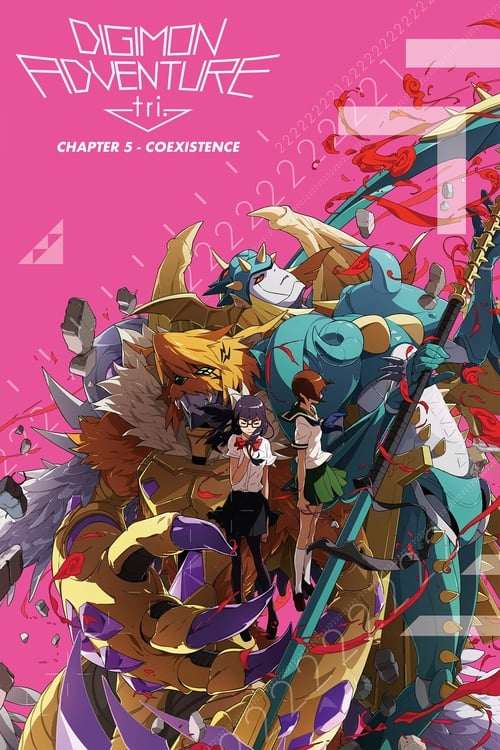
Digimon Adventure tri. Part 5: Coexistence
2017
No user ratings available yet
Representation score: 6.1 out of 10
Representation Score
Fair
2017
PG-13Director
Keitaro Motonaga
Runtime
82 minutes
Average Rating
No ratings yetNew Showbiz Analysis
Digimon Adventure tri. Part 4: Loss transitions the franchise from external adventures to psychological realism. It successfully elevates female characters, providing Sora and Mimi with complex emotional arcs that go beyond passive supporting roles. However, the film remains limited by a lack of characters who reflect more than one aspect of diversity. The cast is ethnically homogeneous, and the narrative does not include LGBTQ+ identities or characters with disabilities. Ultimately, the film prioritizes deep, character-driven emotional complexity over broad social diversity.
Category Breakdown
The film does not include explicit representations of same-sex relationships or non-binary identities. The character interactions focus on typical teenage dynamics without incorporating queer perspectives.
Female characters such as Sora and Mimi have significant emotional ability to act and take on more prominent roles. However, they still operate within traditional genre archetypes and do not challenge gender hierarchies.
The cast is ethnically uniform, reflecting the Japanese setting and original character identities. There is no indication of diverse racial representation among the main cast.
The storyline examines skepticism toward adult authority and government institutions. It emphasizes the tension between digital reality and adolescence without delving into specific political frameworks.
The film does not prominently depict physical or neurodivergent disabilities. Character arcs do not explore chronic illnesses or sensory impairments.
Present on Screen
Limited or Absent
Official Synopsis
Upon arriving at the Digital World after the "reboot", the Digidestined are hunted by a new villain. Meanwhile, Sora is troubled by her partner Digimon's indifference towards her.
2017

2013

2016

2019
2016
2018

2015
2000
No reviews yet. Be the first to share your thoughts on this movie!
Use the rating form above to leave a star rating and optional review.