
The Changing of the Guard
1962
No user ratings available yet
Diversity score: 4.8 out of 10
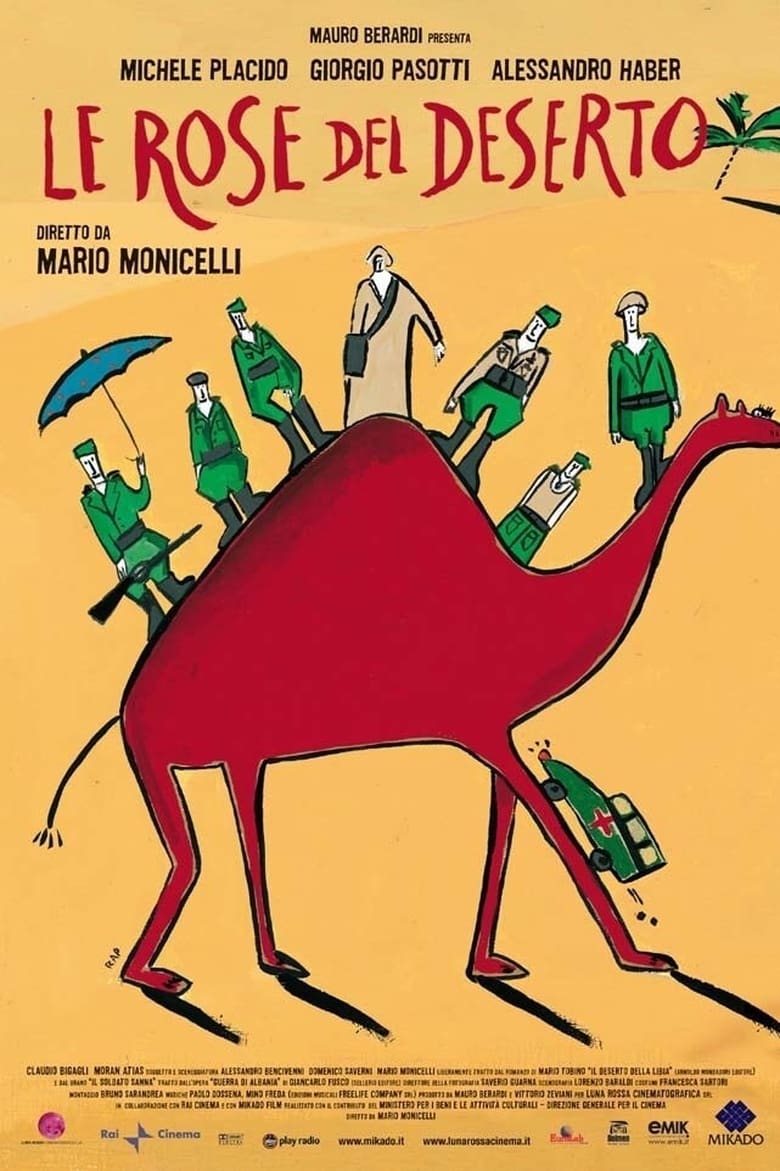
2006
Director
Mario Monicelli
Runtime
102 minutes
Average Rating
No ratings yetSynopsis
A sanitary battalion of Italian Army is sent to Sorman oasis in Lybia during the Africa campaign in 1940. Soon an Italian missionary, living nearby, succeed to transform the occupation by Italian Army in a kind of humanitarian mission. In fact all the battalion is involved to help the local population. The war anyway goes on with no regards to human feelings. The "glorious" Fascist campaign is going to became a fast retreat.
Overall Score
Good
Category Breakdown
LGBTQ+ Representation
The film offers no evidence of LGBTQ+ characters or non-heteronormative identities. The narrative focus remains on the interactions between the Italian military and the local Libyan population.
Gender Representation
The story centers on a military battalion and a missionary, roles traditionally held by men. However, the film's critique of hyper-masculine military pursuits suggests a potential softening of traditional archetypes.
Racial & Ethnic Diversity
The film centers the Libyan population, disrupting conventional conqueror tropes. By framing the occupation through a humanitarian lens, the local population is depicted with significant agency rather than as background elements.
Religious & Cultural Diversity
The narrative prioritizes humanitarianism over nationalistic duty, critiquing Fascist institutions. The tension between the missionary's mission and state objectives suggests a preference for localized moral frameworks over institutional corruption.
Disability Representation
There is no mention of characters with visible or invisible disabilities within the provided narrative details.
Strengths
Areas for Improvement
AI Analysis
Mario Monicelli’s war comedy functions as a revisionist critique of the 1940 North African campaign. It subverts traditional Fascist propaganda by contrasting state-mandated military objectives with the humanitarian realities of a sanitary battalion. The film achieves its strength by deconstructing colonial hierarchies. By shifting the focus from conquest to aid, the story grants agency to the Libyan population and prioritizes human feelings over rigid institutional loyalty. While the film excels in cultural and racial subversion, it lacks representation regarding gender and LGBTQ+ identities. The focus remains heavily on traditionally male-dominated roles within the military and missionary structures.
1962

1962

2004

1967

1984

1943

1965

1959

1958

1961

1952

1960
No reviews yet. Be the first to share your thoughts on this movie!
Use the rating form above to leave a star rating and optional review.