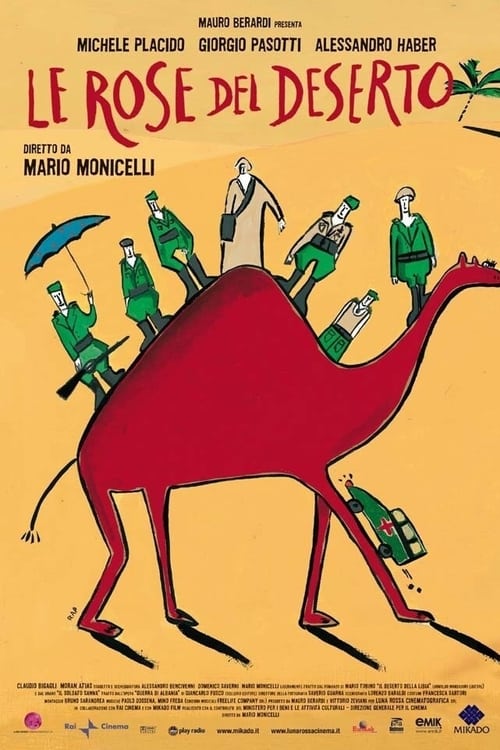
The Roses of the Desert
2006
No user ratings available yet
Diversity score: 6.3 out of 10

1962
Director
Giorgio Bianchi
Runtime
88 minutes
Average Rating
No ratings yetSynopsis
During WW2, it's not wise to be a mayor chosen by the fascists with the Americans' impending arrival.
Overall Score
Fair
Category Breakdown
LGBTQ+ Representation
The film lacks explicit LGBTQ+ characters or non-heteronormative narratives. It operates within the conventional social structures typical of 1962 Italian cinema.
Gender Representation
The narrative focuses on masculine political agency and institutional leadership. There is no evidence of women in positions of authority or the subversion of gender hierarchies.
Racial & Ethnic Diversity
The film reflects the demographic homogeneity of its WWII Italian setting. While Americans arrive, there is no evidence of a non-white majority cast.
Religious & Cultural Diversity
The story effectively deconstructs traditional political authority through satire. It critiques systemic corruption by portraying fascist-appointed officials as precarious and absurd.
Disability Representation
There is no verifiable evidence regarding the depiction of physical or neurodivergent characters in this work.
Strengths
Areas for Improvement
AI Analysis
The film functions primarily as a wartime satire, using comedy to dismantle the sanctity of fascist institutions. Its strength lies in its cultural critique of political instability and corruption during a period of massive transition. However, the work is limited by the social norms of its era. It lacks visible representation for LGBTQ+ identities and racial diversity, focusing instead on a homogeneous Italian landscape. Ultimately, the film trades modern intersectional markers for a sharp, situational critique of nationalist ideologies and the absurdity of wartime leadership.
2006
1967
1958
1962

1965

1952
1961
1961

1943
1960

1946

2022
No reviews yet. Be the first to share your thoughts on this movie!
Use the rating form above to leave a star rating and optional review.