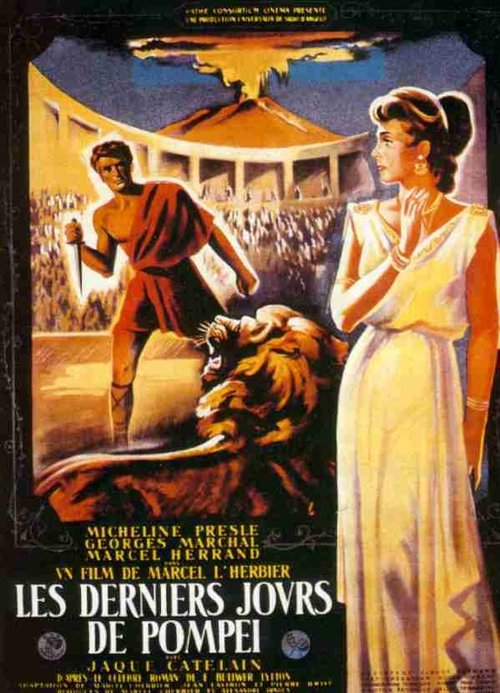
The Last Days of Pompeii
1950
No user ratings available yet
Representation score: 2.3 out of 10
Representation Score
Minimal
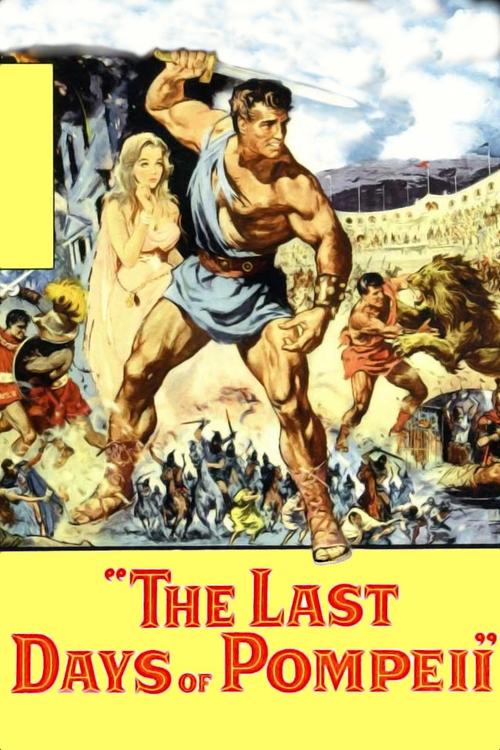
1959
NRDirector
Mario Bonnard
Runtime
103 minutes
Average Rating
No ratings yetNew Showbiz Analysis
Mario Bonnard’s epic is a quintessential product of 1950s 'Sword and Sandal' cinema. It prioritizes classical narrative structures and traditional heroism over any attempts to challenge social hierarchies or explore multiple aspects of identity. The film reinforces mid-century cinematic clichés, particularly regarding gender and race. It presents a Eurocentric, monolithic view of antiquity that lacks ethnic diversity or complex character's ability to drive the story for women. Ultimately, the film functions as a conventional historical melodrama. It seeks to entertain through established archetypes rather than challenging the cultural or social norms of its era.
Category Breakdown
The film strictly follows the assumption that everyone is straight or cisgender. The plot revolves around Glaucus's pursuit of Ione, with no representation of non-straight or non-cisgender identities or same-sex relationships.
Female characters such as Ione mainly serve as romantic interests or catalysts for the male lead. Men hold most of the ability to act, while women are often portrayed as needing protection.
The production features a predominantly European cast. Despite being set in the Mediterranean, the casting presents a culturally uniform view of Roman society without including diverse ethnicities.
The story explores tensions between Roman paganism and early Christianity through historical melodrama. It emphasizes classical heroism and fate over modern critiques of systemic oppression or class issues.
There is no representation of physical disabilities, neurodivergent conditions, or chronic illnesses. Characters are characterized by the physical vitality typical of the adventure genre.
Present on Screen
Limited or Absent
Official Synopsis
Glaucus, a demobilized centurion returns home to Pompeii to find his father murdered by a gang of black-hooded Christian robbers that terrorizes the city and he decides to investigate the matter while the nearby volcano threatens to erupt.
1950

1951
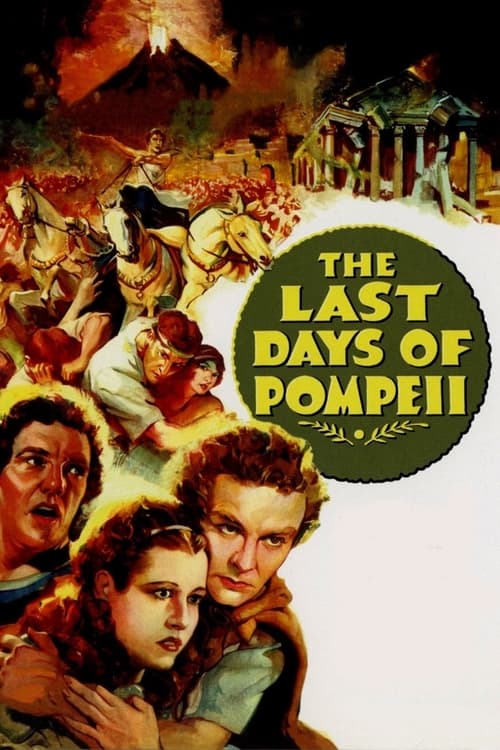
1935
1960
1908
1959
1913
2016
No reviews yet. Be the first to share your thoughts on this movie!
Use the rating form above to leave a star rating and optional review.