
Gröna hissen
1944
No user ratings available yet
Representation score: 2.0 out of 10
Representation Score
Minimal
1941
15Director
Gösta Stevens
Runtime
73 minutes
Average Rating
No ratings yetNew Showbiz Analysis
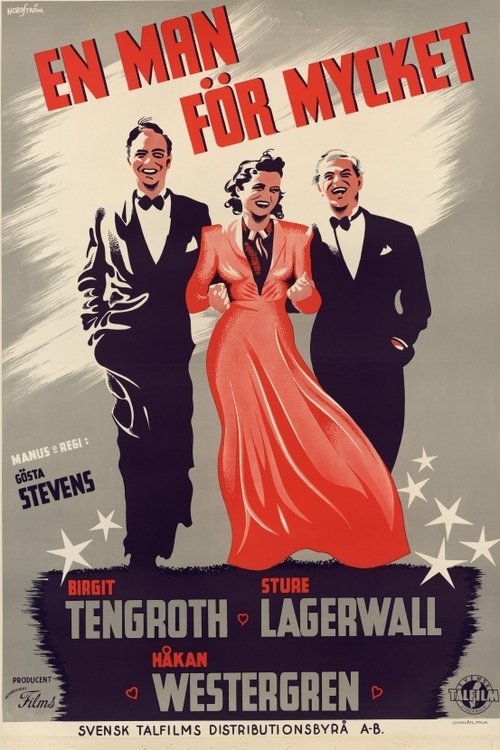
En man för mycket is a period-specific comedy that leans heavily on the social conventions of 1941. While the central plot introduces a non-traditional romantic structure through a ménage à trois, the film remains anchored in traditional interpersonal dynamics. The narrative lacks depth in reflecting multiple aspects of identity and fails to provide real power to underrepresented groups. Instead, it focuses on the jealousy and misunderstandings of a central trio, functioning as a character-driven comedy rather than a tool for social critique. Ultimately, the film operates within the conventional frameworks of its era, offering little disruption to the status quo regarding gender, race, or identity.
Category Breakdown
The film includes a ménage à trois involving a husband, wife, and former fiancé. However, the plot focuses on heterosexual jealousy rather than exploring LGBTQ+ identities.
The story revolves around a traditional romantic conflict between Sonja and Kurt Dal. Although the three-person dynamic deviates from the nuclear family, it still relies on conventional gendered clichés.
The production reflects the demographic homogeneity of 1941 Stockholm. There is no evidence of diverse casting or characters that challenge the era's social norms.
The narrative focuses on individual romantic complications and interpersonal dysfunction. It avoids broader critiques of Western institutions, religion, or systemic social structures.
The film provides no mention of characters with visible or invisible disabilities.
Present on Screen
Limited or Absent
Official Synopsis
Julius Berge has an advertising firm in Stockholm together with his wife Sonja. The man with the ideas is their colleague Kurt Dal, who used to be engaged to Sonja. Their ménage à trois becomes a crazy mix of jealousy and misunderstanding.
1944
1973

1958
1955
1994
1943
1947
1952
No reviews yet. Be the first to share your thoughts on this movie!
Use the rating form above to leave a star rating and optional review.